
CFTC Files Lawsuit To Halt First-In-Nation Minnesota Prediction Market Ban

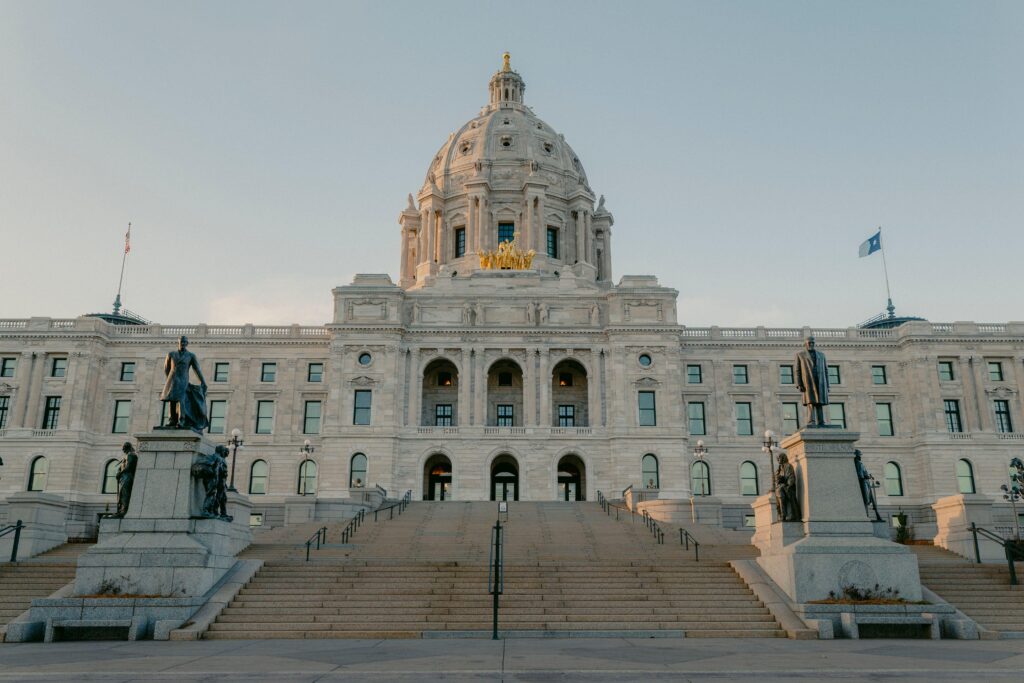
The Commodities Futures Trading Commission Tuesday filed a federal lawsuit against Minnesota, one day after that state became the first in the nation to legislatively ban prediction markets. The Minnesota Prediction Market Ban affects sites such as Kalshi and Polymarket U.S. and marks another chapter in the national fight over sports-event contracts beyond the courtroom and into statehouses.
A sweeping public safety bill signed by Gov. Tim Walz Monday makes it a felony to host or advertise prediction market platforms in the state.
The bill containing the Minnesota Prediction Market Ban passed both chambers last week with broad bipartisan support as lawmakers rushed to wrap up business ahead of the Legislature’s constitutional adjournment deadline Monday.
The Historic First criminalizes the hosting or promotion of prediction markets tied to athletic events, games of skill, wars, natural disasters, government actions, court proceedings and mass-casualty events. People involved in operating or facilitating those platforms could face felony charges.
"Peak hypocrisy: MN banning prediction markets while its gov't collects millions a year from slot machines, poker games, roulette tables, and casino games. Does anyone believe that casinos are safe and well-regulated, but CFTC-registered exchanges and clearinghouses are not?" posted Kalshi spokesperson Elisabeth Diana on X.
She shared the same statement Tuesday when asked for comment on the ban's enactment.
CFTC Seeks Preliminary Injunction
The CFTC is seeking a preliminary injunction to stop the law from going into effect on August 1, 2026.
“This Minnesota law turns lawful operators and participants in prediction markets into felons overnight,” said CFTC Chairman Michael S. Selig in a statement. “Minnesota farmers have relied on critical hedging products on weather and crop-related events for decades to mitigate their risks. Governor Walz chose to put special interests first and American farmers and innovators last.”
The CFTC, in its announcement, sited the agricultural history of Minnesota and the role of prediction markets in that space.
"The Minnesota government has nonetheless enacted a state law criminalizing trading in many CFTC-regulated markets with a broader reach than any other state the CFTC has sued to date, including criminalizing weather-related event contracts. The new legislation represents the most aggressive move by a state to shut down CFTC-regulated markets and undermine the federal regulatory regime set up by Congress more than 50 years ago," the CFTC said.
The new law marks a significant escalation in the widening state-versus-federal battle over prediction markets, which operators argue fall under the jurisdiction of the CFTC through the Commodity Exchange Act rather than state gambling laws. The CFTC has either joined, filed, or filed Amicus Curiae briefs in multiple cases concerning Designated Contract Markets.
Unlike other states that have largely pursued cease-and-desist orders, regulatory actions or litigation, Minnesota stands poised to become the first to attempt an outright statutory ban through the legislative process.
Prediction Market Battles Rages Across Nation
The Coalition for Prediction Markets issued the following statement to bookies.com
This attempt to ban lawful, federally licensed financial exchanges won’t stand up in court. Instead it will waste taxpayer dollars to litigate and take choice away from the tens of thousands of Minnesotans who participate in these markets.
The legislation lands amid mounting national scrutiny of prediction markets and sports-event contracts.
States including Ohio, Wisconsin, Nevada, Massachusetts and Arizona have all moved against prediction market operators in recent months through lawsuits, fines, enforcement actions or court challenges.
Ohio regulators recently issued a proposed $5 million fine against Kalshi for allegedly operating unlicensed sports gaming. Wisconsin’s Department of Justice sued Kalshi, Polymarket, Robinhood, Coinbase and Crypto.com over sports-event contracts. Nevada and Massachusetts courts have also weighed challenges involving whether federal commodities law preempts state gambling statutes.
In Arizona, a federal judge temporarily blocked the state from enforcing gambling laws against prediction-market operators, siding — at least preliminarily — with arguments that event contracts may qualify as federally regulated swaps under the Commodity Exchange Act.
Supporters of Minnesota’s bill argue the platforms operate as unregulated sportsbooks while avoiding state licensing requirements, taxes and responsible-gaming safeguards.
Critics warn the measure could trigger costly federal litigation.
Minnesota’s law could become a blueprint for other states seeking to curb prediction markets legislatively rather than waiting for ongoing federal court fights to play out.
 Best NFL Prediction Markets For NFL Week 6
  Costa Bingo Bonus Code: Get £40 Bingo Bonus or 50% Games Bonus
  Arsenal Multiple Trophies: Odds For Arsenal To Win Quadruple, Treble, Double in 2026/27
  QuickBet Free Bets October 2026: How to Get a £10 Free Bet
  Playzee Welcome Bonus October 2026: Get £20 in Free Bets
  Best New Sportsbooks in the US: 5 Online Sites to Join Right Now
Comments