
Wisconsin Tribal Lawsuit Against Kalshi Could Spell Trouble For Prediction Markets

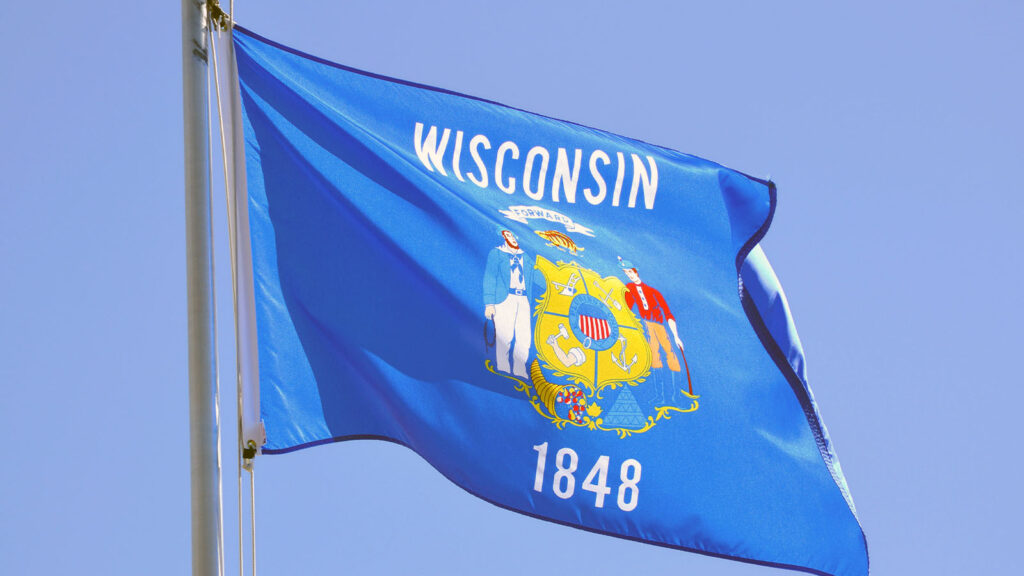
The tribal front in the war over prediction markets may have just become Kalshi’s biggest legal threat yet. A federal judge in Wisconsin this week handed the Ho-Chunk Nation an early victory in its lawsuit against the federally regulated prediction market operator. The judge allowed the Wisconsin Tribal Lawsuit Against Kalshi to move forward and signaled the tribe is likely to succeed on key arguments tied to the Indian Gaming Regulatory Act (IGRA).
That distinction matters.
Unlike the growing pile of state-level lawsuits challenging Kalshi’s sports-event contracts as illegal gambling, the Wisconsin Tribal Lawsuit Against Kalshi case pits one federal framework against another: tribal gaming rights under IGRA versus the Commodity Futures Trading Commission’s authority over federally regulated derivatives markets.
And legal observers believe that changes the equation dramatically.
“This could lead to a tidal (tribal) wave of new litigation,” sports gaming attorney Daniel Wallach posted on X. “Preemption does not apply to a federal-on-federal lawsuit.”
That line may become the defining legal theme of the next chapter in the prediction market fight.
Kalshi has largely leaned on the same defense in state lawsuits across the country — arguing that because it operates as a federally regulated exchange under the Commodity Exchange Act (CEA), state gambling regulators cannot interfere with its business.
Tribes Failed In Past, But This Time It Could Be Different
Kalshi secured favorable rulings in California and Tennessee tribal-related disputes. The CFTC also has aggressively sued states including Wisconsin, Arizona, Illinois, Connecticut and New York, arguing state gambling laws are preempted by federal commodities law.
But Wisconsin may represent an entirely different battlefield.
Under IGRA, federally recognized tribes possess exclusive rights to offer certain forms of Class III gaming on tribal lands through negotiated state compacts. The Ho-Chunk Nation argues Kalshi’s sports-event contracts violate those exclusivity rights because the products function as sports betting.
U.S. District Judge William M. Conley appeared receptive to that argument:
Just because Kalshi’s conduct is not prohibited by the UIGEA does not make its offering of sports betting contracts legal anywhere, much less on Indian lands where it is expressly prohibited.
Conley noted the potential “absurd results” of broadly defining sports-event contracts as federally protected swaps.
“The Wisconsin federal judge highlights the ‘absurd results’ that could flow from defining a ‘swap’ to include sports-event contracts,” Wallach added on X, “noting that the CEA makes it ‘unlawful for any person to enter into a swap’ outside of a DCM.”
In other words: If sports contracts are truly swaps under federal commodities law, then nearly every unregulated sports wager in America could theoretically become unlawful under the CEA itself — a legal contradiction that tribal plaintiffs are now exploiting.
In his filing, Judge Conley noted Kalshi's previous claims that it was a betting site:
For example, on its Instagram account, @kalshi_official, Kalshi has published
advertisements stating that Kalshi offers 'The First Nationwide Legal Sports Betting Platform,”
making “Sports Betting Legal in all 50 States on Kalshi.'
The Wisconsin ruling underscores the growing political and legal strength tribes wield in gambling litigation.
The Seminole Tribe of Florida ultimately prevailed in its years-long legal battle over statewide online sports betting, preserving the tribe’s exclusive control of Florida sports wagering through its Hard Rock Bet platform. The same hub-and-spoke sports betting framework used in Florida that allows servers on Tribal Lands was recently adopted in Wisconsin.
Federal courts repeatedly upheld the Seminoles’ compact rights despite fierce opposition from commercial operators and anti-gambling groups.
That precedent looms large here.
Tribal Turf vs Legal Precedence
If tribes begin framing prediction markets as encroachments on federally protected tribal gaming exclusivity — rather than simply violations of state gambling law — Kalshi and the CFTC could face a far more complicated legal challenge than the state-by-state fights they have largely controlled so far.
And there is reason to believe more tribes may follow.
The Ho-Chunk Nation case marks the first major ruling that appears to side with tribal interests against prediction markets. A broader tribal coalition challenge could create a patchwork of federal litigation across Indian gaming jurisdictions nationwide.
That would significantly raise the stakes for Kalshi, whose sports-event contracts reportedly account for roughly 90% of its business and more than $1 billion in annual revenue, according to Wisconsin court filings.
The broader battle remains unresolved.
Kalshi maintains its contracts are federally regulated financial products overseen exclusively by the CFTC — not gambling. The company argues Congress centralized oversight of derivatives exchanges under the Commodity Exchange Act specifically to avoid fragmented state regulation.
But tribal sovereignty cases do not fit neatly into that argument.
And that may be exactly why the Wisconsin ruling could become one of the most important legal developments yet in the rapidly escalating war between prediction markets, tribes, states and sportsbooks.
 Top 20 Online Casinos US for 2026 | Top Real Money and Social Casinos
  Top 8 Highest RTP Slots at Canadian Online Casinos October 2026
  BetRivers Casino Bonus Code: Get Up to $500 Back or a $250 Match October 2026
  Rebet Referral Code BOOKIES: Matched Bonus Up to $100 in Rebet Cash
  Fliff Promo Code BOOKIES: Get up to $250 in Free Play
  NBA Betting in Alberta: Sportsbooks, Odds & Kawhi Leonard's Raptors Return
Comments