
Land-Based Casinos Face Stacked Deck, But See Winning Hand In N.Y.

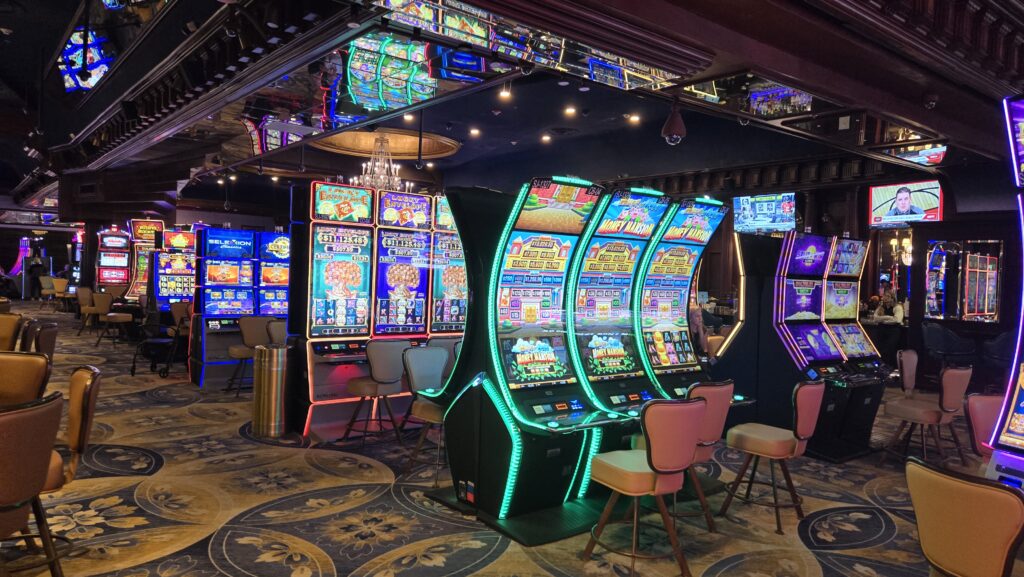
SAN JUAN, Puerto Rico – Martin Scorsese never made a movie called “Gaming App.” But his classic mob-based flick “Casino” comes up all aces after 30 years. Land-based casinos try to wow customers with the latest technology in terms of slots and other gaming options. But for many players, they appear to be stuck in a bye-gone era.
The traditional land-based casino bridged the gap for many states between lotteries and parimutuels, to sports betting and iGaming. Now those casinos, which often employ thousands and provide essential tax revenue for their local jurisdictions, have in a sense become victims of their own success. In addition to the glacial spread of iGaming in the United States, they face a rogue wave of verticals - including video game terminals, sweepstakes casinos, and perhaps as early as next year, prediction markets.
Conversely, a $15 billion casino build in U.S. history looms in New York. Three casinos received a green light from Gaming Facility Location Board on Dec. 1. The winners — Bally’s Corporation in The Bronx, and Metropolitan Park and Resorts World in Queens — await one last round of approval before construction begins.
'Really Excited' About New York Future
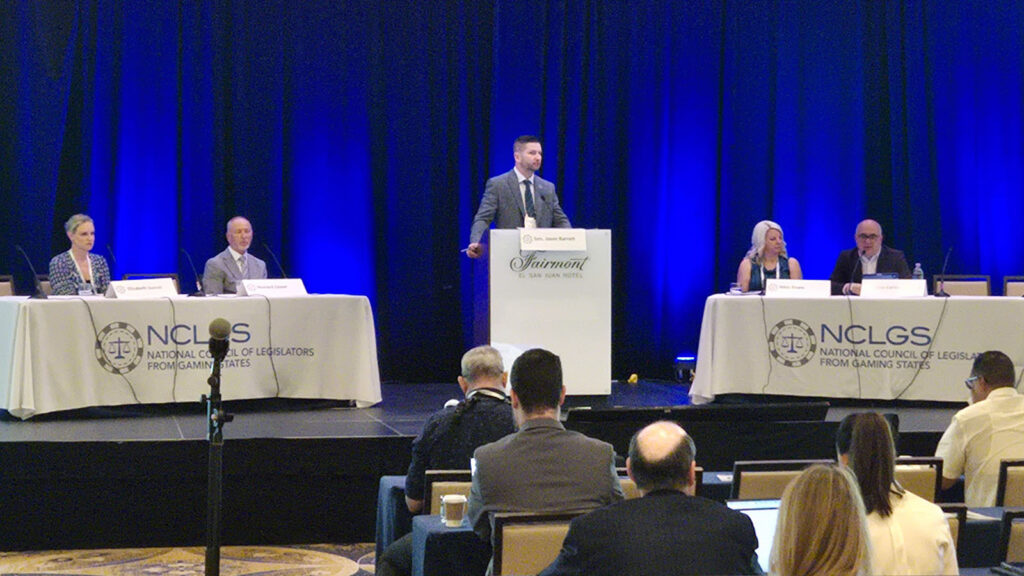
"We're really excited" about approval in New York, said Elizabeth Suever, Vice President of Government Relations for Bally's. "People of the Bronx want the chance to have economic development." Suever spoke a panel focusing on the future of brick-and-mortar casinos at the Winter Meetings of the National Council of Legislators From Gaming States (NCLGS).
Howard Glaser, Global Head Of Government Affairs at Light and Wonder, said New York represents "the largest traditional brick-and-mortar expansion in U.S. history." And he noted that the approval process, which began 3 years ago, was quicker than many expected. "It's seven-year process to change the name of a street in New York," Glaser said.
'iGaming Not Really A Threat'
Neither Glaser nor Suever believes that iGaming poses a threat to the future of their land-based ancestors. "iGaming is not really a threat," Glaser said.
Suever noted her company's history in Rhode Island. There, Bally's owns and operates 2 land-based casinos but also pushed and got iGaming adopted there, as well.
"It's been an unqualified success," she said.
Concerns about cannibalization after the addition of iGaming in Rhode Island have been unfounded, she said. "I understand that fear," she said. but "the reality is your constituents are already doing it in the offshore or illegal space. The cannibalization has already occurred."
Online Casinos Closing The Revenue Gap
In states where there are both online and retail casinos, the retail operators hold an edge in overall revenue. But that gap is closing quickly.
In New Jersey, for example, its land-based Casino Win in 2025 was $2.44 billion through October, according to the Department of Gaming Enforcement. The figure marked a 3.4% increase from the previous year.
Meanwhile, the Garden State’s online casinos total Casino Win during the same period stood at $2.39 billion. That represented a 22.6% spike over the past year.
The other NCLGS panelists Friday were Nikki Evans, General Counsel, Missouri Gaming Commission and Jose Carlos Figueroa, Caribbean Regional Manager, for GLI.
Georgia Representative Asks For Advice
Georgia State Rep. Al Williams, President Elect of the NCLGS, asked the panel what he could do to help win hearts and minds this spring when the question of legalized casino and sports betting returns.
"Bring them to Mississippi. Bring them to Louisiana," Glaser said. "Those are 2 states that are very conservative and long had a traditional anti-gambling stance."
RELATED
Both Louisiana and Mississippi have land-based casinos. Mississippi allows retail sports betting. Louisiana offers online sports betting, as well, but it varies by the individual Parish.
Efforts to legalize gambling in Georgia beyond the lottery have now failed in 5 straight legislative sessions. To legalize gambling in Georgia, any bill must pass both houses of the legislature, and be signed by the governor. Then, any gambling law would have to face a state-wide referendum in the November 2026 election.
"Tell them you're not deciding whether or not there should be gambling. You're allowing the people to decide whether to allow it," Glaser said. "Let them have the choice."
 Online Casino Bonus Codes in Canada Ranked by Experts For April 2026
  Next Crystal Palace Manager Odds: Robbie Keane, Thomas Frank In Frame To Replace Glasner
  Next Chelsea Manager Betting Odds: Can Under Pressure Liam Rosenior Survive The Season?
  Next Liverpool Manager Betting Odds: Will Arne Slot Be In Charge Next Season?
  FA Cup Betting Offers, Betting Tips & FA Cup Free Bets for Quarter-Finals - Man City vs Liverpool
  Championship Promotion Odds 2025/26 - Middlesbrough, Ipswich, Millwall Battle For Automatic Spot
Comments