
Virginia Governor Vetoes Fairfax County Casino Bill

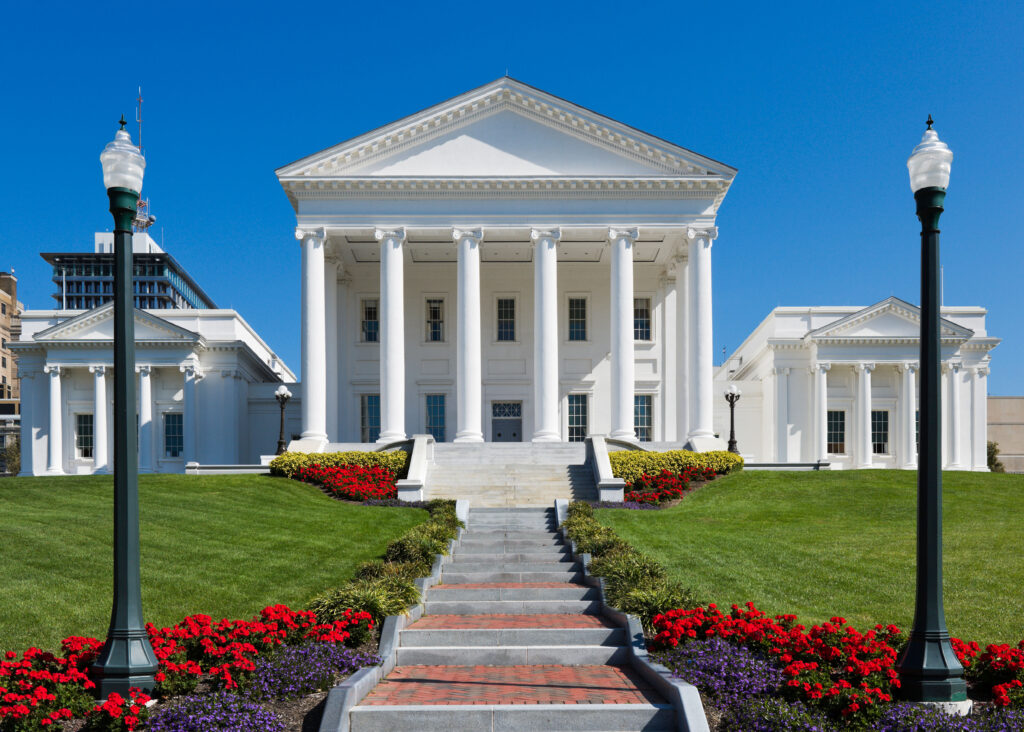
Gov. Abigail Spanberger vetoed legislation Thursday that would have opened the door for a casino development in Fairfax County, shutting down a new Virginia casino proposal that had already cleared both chambers of the General Assembly and was being pitched as a potential economic lifeline for Northern Virginia.
The Virginia casino bill shifted decision-making authority away from the state and back to the local level, allowing the Fairfax County Board of Supervisors to decide whether to put a casino referendum before voters. Instead, Spanberger sided with local opposition — and drew a hard line on process.
“Local governing boards should lead on proposed casino development,” Spanberger said in a statement. “But in Fairfax County, the Board of Supervisors has explicitly opposed this legislation.”
That local resistance proved decisive. The Board of Supervisors had already come out strongly against the project. There are currently three land-based casinos in Virginia.
- Rivers Casino Portsmouth
- Hard Rock Bristol
- Caesars Virginia
Spanberger's veto comes after the General Assembly failed to pass Virginia iGaming legislation earlier this year.
A Rare Break From Virginia’s Casino Playbook
Virginia’s retail casino expansion has largely followed a consistent model: local approval first, then state authorization.
This proposal flipped that script.
The bill would have effectively forced a pathway forward in Fairfax County — including language that outlined a potential 1.5 million-square-foot mixed-use casino and entertainment development, widely expected to center around the Tysons area.
Spanberger flagged that as a key concern.
“In no other circumstance has the General Assembly prescribed specifications for a casino’s location,” she said, warning the bill could set a precedent for bypassing local opposition in other parts of the state.
Economic Pressure vs. Political Reality
Supporters framed the casino as a necessary pivot for a county facing mounting financial pressure.
Fairfax County is staring down a reported $300 million budget shortfall, while already carrying the highest tax rate in Northern Virginia. They argued the region’s traditional economic drivers — long anchored by federal spending and contracting — are no longer enough.
A casino, in that context, was pitched as a new revenue engine.
But critics pushed back on both the economics and the impact. Concerns around traffic congestion, community character and problem gambling surfaced repeatedly during the debate — and appear to have resonated with local officials.
The Money Question: Who Actually Benefits?
One of the quieter sticking points in the debate was Virginia’s casino tax structure.
Under current law, roughly 70% of casino tax revenue flows to the state, with about 30% staying in the host locality. That split has been a point of tension in other jurisdictions — and likely complicated the pitch in a wealthy, high-cost area like Fairfax, where the local upside may not have justified the trade-offs.
What’s Next?
The veto doesn’t necessarily kill casino hopes in Fairfax County forever — but it resets the process.
Any future effort will almost certainly need to originate locally, with buy-in from the Board of Supervisors before gaining traction in Richmond. For now, that support isn’t there.
From a broader industry lens, the decision reinforces a key theme across U.S. gaming expansion: local politics still matter more than statewide appetite — even in regions facing clear fiscal pressure.
And for operators eyeing Northern Virginia as one of the last untapped, high-income markets on the East Coast, the message is clear:
If you want in, you’ll need to win over the locals first.
 $5 Dollar Deposit Casinos Launched in Alberta October 2026
  Rebet Referral Code BOOKIES: Matched Bonus Up to $100 in Rebet Cash
  Top 5 Betting Apps Right Now October 2026
  Fliff Promo Code BOOKIES: Get up to $250 in Free Play
  Alberta Stanley Cup Betting: How to Bet on Edmonton Oilers and Calgary Flames
  Top 10 Social Casinos October 2026: Best Sites Ranked
Comments