
California’s Sweepstakes Casino Ban Takes Effect Jan. 1 — What It Means for Bettors, Tribes, and the Future of iGaming

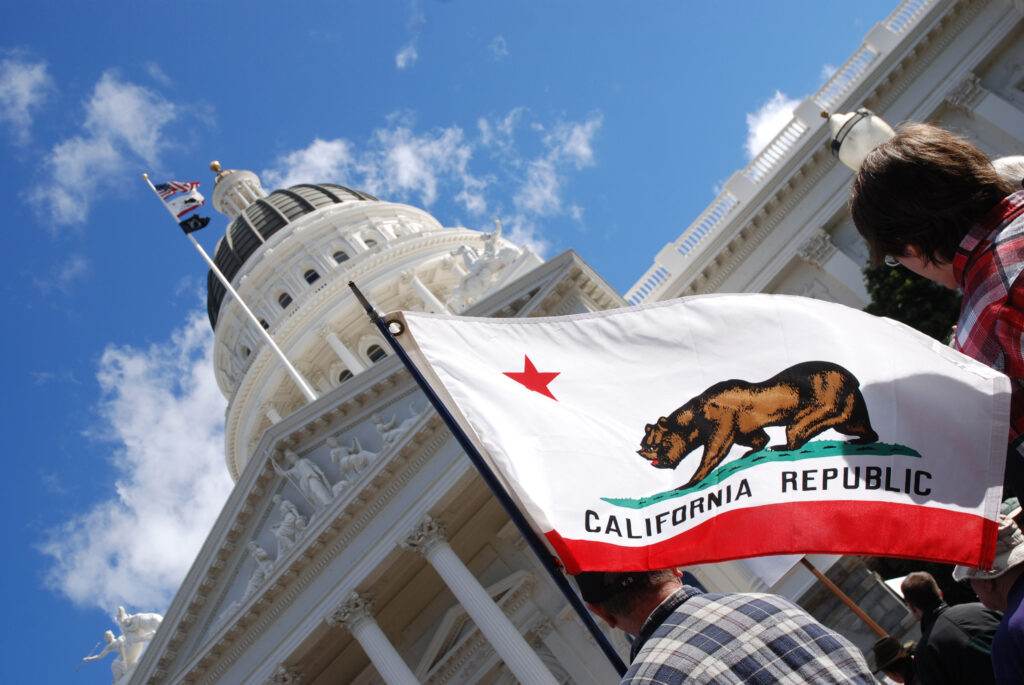
LAS VEGAS - California has slammed the door on sweepstakes casinos. Finally, it appears speed of government caught the speed of technology in capitalism in the sweeps space.
The California Sweepstakes Casino Ban goes into effect on January 1, 2026, ending a Golden Era Of Gray-Area Gambling that skirted regulations and deprived the state — and tribal operators — of billions in potential revenue.
By signing Assembly Bill 831 into law, Gov. Gavin Newsom officially enacted a ban on so-called “sweepstakes” or “social” casino models in his state. As of Monday, California players can no longer purchase Gold Coin packages that include promotional sweepstakes currency. Players will still be able to participate in sweepstakes play and redeem winnings through December 31. After that point, only non-redeemable Gold Coin gameplay is allowed.
The move wipes out what some analysts estimate to be a $1 billion annual business in California alone and closes one of the biggest remaining U.S. markets for sweepstakes-style gaming.
The decision also sets the stage for a larger conversation: whether California is finally inching toward legalizing real-money online casino gaming — and who might get to control it.
A general session, “Sweeps at the Crossroads: Legislation, Litigation, and the Future of Sweepstakes Models,” kicks off the National Council of Legislators from Gaming States Winter Meeting, which takes place next week in Puerto Rico. On Dec. 5, Gov. Kathy Hochul signed the bill into law that banned New York Sweepstakes Casinos. Most operators, however, had begun to exit the state once that bill cleared the legislature in Albany.
What Are Sweepstakes Casinos?
Sweepstakes casinos operate in a legal gray area that has frustrated lawmakers, tribal leaders, and regulated operators. Sweepstakes casinos were the main topic of discussion in the legal regulated space throughout 2023 and 2024, until they were overtaken by prediction markets this year.
Unlike traditional online casinos, players at sweepstakes sites don’t “bet” money directly on games. Instead, they purchase play tokens known as Gold Coins that have no cash value. Players can then use these coins for entertainment or receive “Sweeps Coins” as a free promotional bonus. Those Sweeps Coins can be redeemed for real cash prizes — effectively functioning as casino credits under a different name.
This setup theoretically allowed the companies to operate outside of the state’s anti-gambling statutes. In practice, most users viewed and used these platforms exactly like real online casinos — spinning slots, playing blackjack, and chasing payouts.
During his keynote address at the Global Gaming Expo here on October 7, American Gaming Association President Bill Miller all-but formally declared war on sweepstakes casinos, prediction markets and offshore casinos and sportsbooks.
“Sweeps operators in California brag about ‘economic impact they allegedly generate. Nearly every penny goes to buying digital ads. There’s a difference between buying ads on Facebook and supporting Main Street. Why all this deception? Simple: they want the opportunity … but without any regulatory compliance or any concern for the public good,” he told the crowd at the Venetian Expo Center. “These illegal actors aren’t fooling anyone. Our own research found that 90% of sweepstakes customers call what they’re doing ‘gambling.’”
Miller summed up his industry’s perspective this way;
“You can call it a sports event contract … a skill game ... a sweepstakes … you can call it whatever you want. But it’s still gambling. And if it’s gambling, it needs to play by rules that uphold state and tribal sovereignty,” he said.

How the Ban Happened — and Who Wanted It
California Sweepstakes Casino Ban comes after years of mounting pressure from the state’s powerful tribal casino lobby, which viewed sweepstakes casinos as direct competitors that undermined existing gaming compacts and siphoned off potential revenue.
The bill, authored by Assemblymember James Ramos (D–Highland), a member of the San Manuel Band of Mission Indians, passed the state legislature with unanimous votes in both the Assembly and the Senate. Gov. Newsom signed it despite pushback from several industry trade groups and smaller operators.
Under the new law, it will be illegal for sweepstakes operators to offer or market their services to California residents. The law targets payment providers, affiliates, and suppliers who assist sweepstakes sites, as well. Those found guilty of violating the law could face up to a year in county jail or a fine of $25,000.
But the fight, for some, is not over.
“Just for the record, we haven't taken our foot off the gas. We will continue to crush the sweepstakes industry wherever it exists. No mercy. No quarter,” Victor Rocha, Conference Chair of the Indian Gaming Association, posted on “X” after the ban was signed.
Closing a Lucrative — and Loophole-Rich — Market
Sweepstakes casinos grew explosively during the pandemic and have since become a multibillion-dollar national business. According to industry projections, the sweeps model could have generated over $4 billion nationwide in 2025.
California’s share — estimated around $1 billion — made it one of the largest and most lucrative markets in the country.
Sweepstakes platforms operate under the premise that they were running “contests,” not gambling. Players could technically obtain free entries by mail, daily log-ins, or social promotions — but almost all revenue came from Gold Coin purchases.
This two-currency system, lawmakers said, was designed to “circumnavigate” gambling laws while maintaining the appearance of legality. California Sweepstakes Casino Ban closes that loophole for good.
As an alternative, sites like myVEGAS! Slots from PlayStudios avoid concerns over cash payments by allowing players to redeem their coins for "tangible experiences" from various sponsors - including MGM Resorts.
A Growing National Crackdown
California and New York are not alone. Over the past year, five other states have moved to ban sweepstakes casinos entirely:
• Montana
• Washington
• Idaho
• Connecticut
• New Jersey
In each case, regulators cited similar reasons — lack of consumer protections, unfair competition with legal gaming, and potential confusion among players. California’s version specifically targets the dual-currency model used by sweepstakes operators, setting a precedent that other states could soon follow.
The likes of Montana, Connecticut, New Jersey and California have all banned sweeps-style gaming through legislation this year.
Florida’s HB 591 has been referred to committee, and has a similar companion measure in the Senate. Florida’s 2026 legislative session begins in March
Meanwhile, Nevada has not formally banned sweepstakes casinos, but aggressive legal action has driven out most operators. Massachusetts and Ohio are currently considering similar bans.
Several of these same states have also taken Kalshi and Robinhood to court over their sports event contract markets.
Not Every State Is on Board With Sweepstakes Ban
Not all legislative efforts have succeeded. Attempts to pass bans in Florida, Arkansas, Louisiana, Maryland, and Mississippi all failed this year.
Florida legislators have lined up two gaming bills for the 2026 session. House Bill 591 makes operating, conducting or promoting internet gambling a third-degree felony. It exempts any gaming allowed by the 2021 gaming compact between the state and Seminole Tribe of Florida. House Bill 189, meanwhile, allows paid daily fantasy sports (DFS) within limits and criminalize betting with so-called inside info.
In Louisiana, Gov. Jeff Landry vetoed a bill that had passed both chambers, while Mississippi’s proposal collapsed after getting entangled in a separate debate over sports betting expansion. Florida’s legislature opted not to act — a major win for operators, since it remains one of the nation’s largest gambling markets. The Seminole Tribe’s hold on gaming in Florida includes its 6 casinos, and an online sports betting monopoly.
Still, the national trend is unmistakable. With California, New Jersey, and New York now effectively off-limits, sweepstakes casinos have lost access to nearly 20% of the U.S. population in less than a year. And more states will undoubtedly follow their lead in 2026, especially as federal dollars dry up and states seek other sources of revenue, and/or to shore up their own legal gaming operators.
Meanwhile, supporters of legal gambling in Texas lost ground during this year's bi-annual legislative session.

Economic Fallout and Industry Reaction
The fallout for operators has been swift. Online casino game developer Pragmatic Play exited the U.S. sweepstakes market in September, citing “growing legal scrutiny.” The departure was triggered in part after the Los Angeles City Attorney sued the offshore site Stake.com, implicating its technology partners in the process. Both Pragmatic Play, and a competitor, Evolution, were named as defendants.
A wave of risk reassessments and exits from the sweepstakes industry followed.
What looked like an innovative workaround for many just two years ago had suddenly morphed into a regulatory, civil, and possibly, criminal, liability.
Some companies are exploring ways to pivot — either by seeking formal regulation under existing casino frameworks or partnering with tribal entities to continue offering games legally. Those options, however, come with compliance costs and oversight requirements that eliminate much of the advantage for sweeps operators.
Many Tribes remain opposed to any additional gaming – whether it be sweepstakes, legal online casinos and sports betting – and prediction markets in jurisdictions where they hold sway.
Could the Ban Pave the Way for Legal Online Casinos in California?
Some believe the California Sweepstakes Casino Ban could help clear the path for the eventual legalization of real-money online casinos.
The failed attempts to legalize sports betting in California indicate otherwise. Two attempts to pass sports betting-related referendums whiffed miserably in 2022 and 2024.
Voters rejected competing online sports betting initiatives in 2022 — one backed by major sportsbooks, the other by tribal nations — in one of the most expensive election debacles in state history. The push in 2024 never even made it to the ballot.
If California revisits online casino legislation, it will only likely occur with tribal gaming operators controlling the market. Commercial entities such as BetMGM, Caesars, DraftKings or FanDuel would be relegated to partner status. Tribes hold exclusive rights to casino gaming in the state, and their influence in Sacramento remains daunting.
In a sense, California Tribes just eliminated their biggest unregulated competitor. They are playing the long game — and winning.
What’s Next for Sweepstakes Casinos?
Without California, New Jersey, or New York, the U.S. sweepstakes casino industry faces an existential challenge heading into 2026.
Some may try to regroup in smaller markets or rebrand under “entertainment-only” labels. Others could attempt to lobby for a regulated pathway that mirrors the online casino model. But the odds are long.
The business that ballooned from obscurity to billions in just a few years now faces a cliff. With California’s ban taking effect on January 1, the Golden Era of Sweepstakes Casinos comes to an end. Will a new era of regulated, tribe-led online gaming follow? Only time holds the answer.
The Bottom Line On The Future Of Sweepstakes Sites
California’s sweepstakes ban marks a defining moment in the evolution of U.S. online gambling. It closes the door on a loophole industry while cracking open the conversation about what comes next.
For tribes, it’s a victory.
For players, it’s a reset.
And for the betting world, it’s another sign that regulation and litigation — not circumvention — is where the future lies.
 $5 Dollar Deposit Casinos Launched in Alberta October 2026
  Rebet Referral Code BOOKIES: Matched Bonus Up to $100 in Rebet Cash
  Top 5 Betting Apps Right Now October 2026
  Fliff Promo Code BOOKIES: Get up to $250 in Free Play
  Alberta Stanley Cup Betting: How to Bet on Edmonton Oilers and Calgary Flames
  Top 10 Social Casinos October 2026: Best Sites Ranked
Comments