
CFTC Chairman Draws Line In Prediction Market Fight As Senate Democrats Push Back

The battle over sports-linked prediction markets just went national. Commodity Futures Trading Commission Chairman Mike Selig has officially joined the prediction market fight. The lines are now clear. On one side, prediction markets, the Trump Administration, the CFTC and Republicans in Congress. On the other side, state regulators, state legislators, governors in both parties, and Democrats in Congress.
In a sharply worded Wall Street Journal op-ed, Selig signaled that the CFTC is prepared to defend its turf — namely what it sees as its exclusive authority over federally regulated event contracts. This comes as state regulators, legislators and Democratic lawmakers warn the agency may be overstepping.
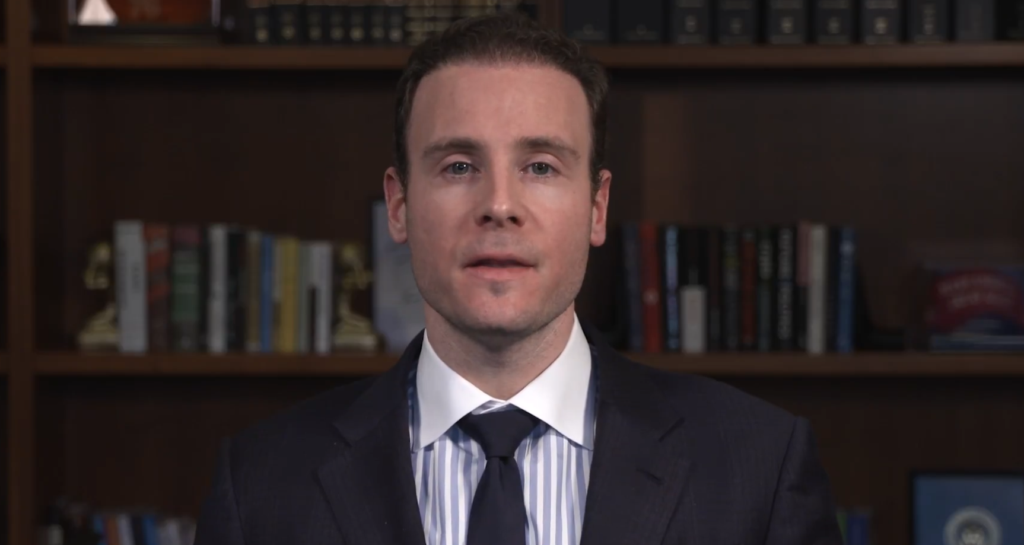
Selig followed the op-ed with a video saying that the CFTC will be filing a "Friend of the Court" brief in the ongoing litigation against prediction markets nationwide.
“The CFTC will no longer sit idly by while overzealous state governments undermine the agency’s exclusive jurisdiction over these markets,” Selig wrote in a column headlined “States Encroach on Prediction Markets.”
In the video he added, "we'll see you in court."
For an industry that has watched states like Nevada, Massachusetts and Illinois grapple with whether sports-based contracts are gambling or derivatives, that was more than rhetoric. It was a declaration of intent.

Gambling problem? Call 1-800-GAMBLER or 1-800-MY-RESET (Available in the US) Call 877-8-HOPENY or text HOPENY (467369) (NY) Call 1-800-327-5050 (MA), 1-800-BETS-OFF (IA), 1-800-981-0023 (PR), Call 1-800-NEXT-STEP (AZ), 1-800-522-4700 (KS, NV), 1-800-270-7117 for confidential help (MI). 21+ only. Please Gamble Responsibly. See http://BetMGM.com for Terms. First Bet Offer for new customers only (if applicable). Subject to eligibility requirements. Bonus bets are non-withdrawable and Expire in 7 Days. In partnership with Kansas Crossing Casino and Hotel. This promotional offer is not available in DC, Mississippi, New York, Nevada, Ontario, or Puerto Rico.
Federal Muscle Enters The Nevada Fight
The timing of Selig’s op-ed and video Tuesday was no accident.
On Feb. 5, the CFTC filed a motion in the U.S. Court of Appeals for the Ninth Circuit. It seeks permission to submit an amicus brief in support of Crypto.com’s derivatives arm, Crypto.com | Derivatives North America (CDNA). The case stems from a dispute between CDNA and Nevada gaming regulators over whether sports prediction contracts fall under federal commodities law or state gambling statutes.
At issue: Whether a CFTC-registered Designated Contract Market can offer event contracts tied to sports outcomes without state gaming approval.
Its filing argues that the Commodity Exchange Act grants the CFTC exclusive jurisdiction over futures and derivatives trading. In plain English: If it’s a regulated derivatives product, states don’t get to treat it like a sportsbook.
The CFTC also cited leadership changes — Selig was confirmed in December and a new general counsel sworn in late January — as reasons for its late filing. It notes the transition “altered the CFTC’s programmatic priorities and institutional posture.”
Meanwhile, a district court judge in Massachusetts put Kalshi on the clock to implement a restraining order. It would geofence the site from trading in sports-event contracts in the Commonwealth.
Selig's video was shared by both Polymarket CEO Shayne Coplan and Kalshi CEO Tarek Mansour. Underdog CEO Jeremy Levine shared the video with the following comment: "Thank you @ChairmanSelig."
Translation: new sheriff, new strategy.

DraftKings Sports Welcome Offer Ts and Cs: GAMBLING PROBLEM? CALL 1-800-GAMBLER or 1-800-MY-RESET, (800) 327-5050 or visit gamblinghelplinema.org (MA). Please Gamble Responsibly. 888-789-7777/visit ccpg.org (CT), or visit www.mdgamblinghelp.org (MD), 1-800-981-0023 (PR). 21+ and present in most states. (18+ DC/NH/PR/WY). Void in CAN. Eligibility restrictions apply. On behalf of Boot Hill Casino (KS). Pass-thru of per wager tax may apply in IL. 1 per new DraftKings customer. $5+ first-time bet req. Max. $150 issued as non-withdrawable Bonus Bets that expire in 7 days after issuance. Stake removed from payout. Reward issued as $50 in Bonus Bets every 7 days via click-to-claim for 14 days. 7 days = 168hrs. Terms: sportsbook.draftkings.com/promos. Ends 8/23/26 at 11:59 PM ET. Sponsored by DK.
Senate Democrats: Stay Out Of It
That strategy has already triggered alarm bells on Capitol Hill.
In a Feb. 13 letter led by Adam Schiff and Catherine Cortez Masto, they and 21 other Senate Democrats urged the CFTC to stay out of active court fights over prediction markets.
Their argument is blunt: Many of these contracts “mirror sportsbook wagers,” bypass state and tribal regulatory systems, and generate no direct public revenue for those jurisdictions."
The senators point to long-standing prohibitions within the Commodity Exchange Act and CFTC rules “gaming" contracts. If sports falls under “gaming,” they argue, the public-interest test has already been settled — such contracts should not be listed.
They also took aim at what they view as Selig’s evolving posture. During his confirmation process, Selig told lawmakers he would “look to the courts” when asked whether sports-event contracts constitute gambling. His recent comments suggest the agency is now prepared to push that boundary rather than wait for judicial clarity.
Bigger Than One Lawsuit
This fight is about more than Crypto.com, Nevada or Massachusetts.
Prediction market platforms such as Kalshi get more than 80% of their volume on sports outcomes. States and tribal regulators see those products as functionally identical to sports betting. The platforms argue they are federally regulated derivatives designed for hedging and price discovery.
For sportsbooks and state regulators, the stakes are obvious: tax revenue, consumer protection frameworks, and regulatory authority.
The CFTC sees this as defending federal supremacy over commodities markets.
For now, the Ninth Circuit appeal looms, the CFTC is preparing its brief, and Senate Democrats are demanding restraint.
The Supreme Court will likely decide whether a Super Bowl “event contract” is a hedge or a bet.
But make no mistake: Washington has officially joined the prediction market war.

Caesars Sports Welcome Offer Ts and Cs: Must be 21+ and physically present in AZ, CO, IL, IN, IA, KS, KY, LA, ME, MD, MA, MI, MO, NJ, NY, NC, OH, PA, TN, VA, WV, WY or Washington, DC. New users only. Must register using eligible promo code. Min. qualifying bet amount: $1. Tokens max. bet amount: $25 per token. Tokens bet max. add'l winnings: $2,500 per token. Token(s) expire 14 days after receipt. Not reissued for voided/pushed bets. Void where prohibited. See Caesars.com/promos for full terms. Know When To Stop Before You Start®. Gambling Problem? CO, IL, KY, MD, MI, MO, NJ, TN, VA, WV, WY, KS (Affiliated with Kansas Crossing Casino), ME (Licensed through the Mi’kmaq Nation, Penobscot Nation, and Houlton Band of Maliseet Indians, federally recognized tribes located in the State of Maine), NC (Licensed through Tribal Casino Gaming Enterprise), PA (Affiliated with Harrah's Philadelphia): If you or someone you know has a gambling problem, crisis counseling and referral services can be accessed by calling 1-800-GAMBLER (1-800-426-2537) or MD: visit mdgamblinghelp.org or WV: visit 1800gambler.net; AZ: Call 1-800-NEXT-STEP; IN: Call 1-800-9-WITH-IT; IA: Call 1-800-BETSOFF; MA: Call 1-800-327-5050 or visit gamblinghelplinema.org, NY: Call 877-8-HOPENY or text HOPENY (467369); LA (Licensed through Horseshoe Bossier City and Caesars New Orleans) Call 1-800-522-4700, Washington, DC (OLG Class A licensed Operator): Call 1-800-MY-RESET. ©2026, Caesars Entertainment
About the Author
 Polymarket Promo Code BOOKIES: Deposit $10, Get a $50 Trading Bonus
  Coral Online Casino Welcome Bonus September 2026: Deposit £10 Get 100 Free Spins
  Best Megaways Slot Games September 2026
  Novig Promo Code BOOKIES: Get a $25 Purchase Match Bonus
  Instant Withdrawal Online Casinos USA September 2026: Fastest Payout Casinos Rated
  Best Progressive Jackpot Slots Online for US Players 2026
Comments