
Massachusetts Enacts First-In-The-Nation Rules On Player Limits By Sportsbooks

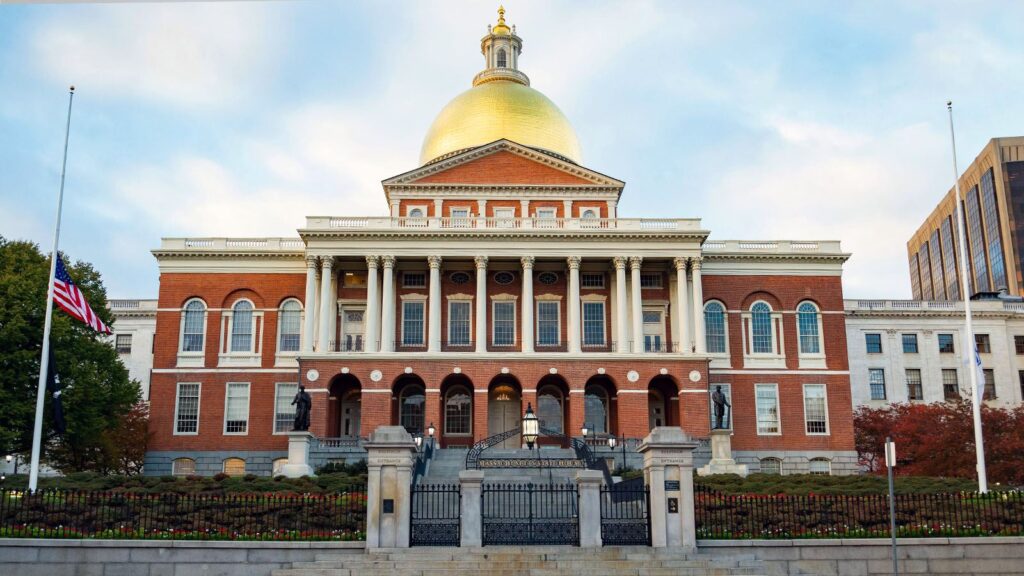
Massachusetts on Thursday enacted first-in-the-nation rules on player limits imposed by legal sportsbooks. The new regulation requires legal sports betting operators in the Bay State to give players “timely notice” - 48 hours - that they have been limited, explain why they were limited, and inform them from which markets they have been limited.
The Massachusetts Gaming Commission approved the regulation (205 CMR 238.30) by a 5-0 vote during its regularly-scheduled meeting on Thursday. This followed a mandatory public comment period, and an initial vote and reading in December.
The regulation takes effect on June 1. It mandates that players currently and previously limited in Massachusetts will receive a notice, as well as those limited after that date.
Before the vote, MGC Chair Jordan Maynard took a swipe at prediction markets. Three operators in the Bay State - Fanatics, FanDuel, and DraftKings - offer sports-event contracts via their branded prediction markets outside of Massachusetts.
"The expectation of the Commission is not to put window dressing or wallpaper on this issue. It's to actually tackle the issue," Maynard said.
"I rarely talk to the operators and say that I am. Those who advocate for those pseudo-regulated, so-called prediction market products use the fact that they are not limited as a positive for their product. I think that as far as the operators can possibly push their business model to be transparent on this piece is a net positive, ultimately. You may see it as a net negative now, but for consumers, I think it's a net positive."
Commissioners Eileen O'Brien and Nakisha Skinner said they expect more detailed information on the reasons behind patron limits if customers continue to complain.
"We'll know pretty quickly who is making that good-faith effort toward the transparency goal," added Commissioner Paul Brodeur.

Gambling problem? Call 1-800-GAMBLER or 1-800-MY-RESET (Available in the US) Call 877-8-HOPENY or text HOPENY (467369) (NY) Call 1-800-327-5050 (MA), 1-800-BETS-OFF (IA), 1-800-981-0023 (PR), Call 1-800-NEXT-STEP (AZ), 1-800-522-4700 (KS, NV), 1-800-270-7117 for confidential help (MI). 21+ only. Please Gamble Responsibly. See http://BetMGM.com for Terms. First Bet Offer for new customers only (if applicable). Subject to eligibility requirements. Bonus bets are non-withdrawable and Expire in 7 Days. In partnership with Kansas Crossing Casino and Hotel. This promotional offer is not available in DC, Mississippi, New York, Nevada, Ontario, or Puerto Rico.
Regulators Weigh Concerns Of Public, Sportsbooks
"It's not just transparency, it's fundamental fairness," O’Brien said in December.
Across Massachusetts and elsewhere, legal online sportsbook patrons have seen their wagers cut to zero, or close to it. But often - if not always - only after winning.
News of the new regulations was first reported by bookies.com back in December, prior to their initial approval.
Regulators weighed patrons’ protection concerns against potential losses to sportsbooks. Legal books face continued competition from offshore and illegal operators. In addition, prediction markets such as Kalshi, Robinhood, and Polymarket now offer sports event contracts. Those platforms are federally regulated and offered in all 50 states.
The MGC met in on Sept. 30 - mostly in executive session - to discuss player limits.
“What we’ve been hearing from members of the public is that if you show a tendency to win, you will be limited. And if you show a tendency to lose, you will have that limit raised,” said MGC Sports Wagering Division Chief Carrie Torrisi during the public portion of that meeting.

Bet365 Sports Welcome Offer Ts and Cs: GAMBLING PROBLEM? CALL 1-800-GAMBLER or 1-800-MY-RESET (AZ, CO, IL, IN, KS, KY, LA, MD, MI, MO, NC, NJ, OH, PA, TN, VA) or 1-800-BETS OFF (IA). Call 1-800-NEXT-STEP (AZ). Call 1-800-9-WITH-IT (IN). CALL 1-877-770-STOP (LA). 21+ only. Please gamble responsibly. Must be present in AZ/CO/IA/IL/IN/KS/KY/LA (select parishes)/MD/MI/MO/NC/NJ/OH/PA/TN/VA. Licensee partner Amelia Belle Casino. Minimum $10 deposit required. Minimum odds -500 or greater. Bonus Bets wager excluded from returns. New customers only. T&Cs, time limits and exclusions apply.
MGC Hears Input From Betting Public, Sportsbooks
During the public comment period that ended earlier this month, the MGC heard from multiple patrons voicing concern about the perceived unfairness of limiting practices.
One public comment, made by Frank Giordano, reflected the feelings of many bettors on this issue:
"The outrageously low limits imposed by sportsbook operators are both punitive and discriminatory. To allow a customer to deposit hundreds of thousands of dollars into their wagering account and then limit them to only 60 cents per game should absolutely be considered illegal. A fair limit would be $50 per wager on each category. The sportsbooks would still earn enormous profits. The unfair rules imposed by these trillionaire corporations are not beneficial to the hardworking taxpayers of Massachusetts."
The Commission received an additional written comments from FanDuel, BetMGM, and Caesars.
FanDuel expressed general support for the Commission’s decision to allow flexibility in the
method and content of customer notifications. BetMGM submitted questions seeking
interpretive guidance and requested the opportunity to discuss the implementation timeline. Caesars identified specific challenges related to its interpretation of the reporting obligation
and presented three alternative approaches for the Commission’s consideration.
Operators typically do not notify players when they issue limits. Nor do they explain the reasons for the restrictions, which commissioners view as an issue of "fundamental fairness."
This lack of transparency in limiting policies became a significant consumer protection concern issue for the MGC.
Commissioners could well push for tighter internal controls and more detailed notification to patrons in the future.

Promo Code: BOOKIESBR250
Caesars Sports Welcome Offer Ts and Cs: Must be 21+ and physically present in AZ, CO, IL, IN, IA, KS, KY, LA, ME, MD, MA, MI, MO, NJ, NY, NC, OH, PA, TN, VA, WV, WY or Washington, DC. New users only. Must register using eligible promo code. Min. qualifying bet amount: $1. Tokens max. bet amount: $25 per token. Tokens bet max. add'l winnings: $2,500 per token. Token(s) expire 14 days after receipt. Not reissued for voided/pushed bets. Void where prohibited. See Caesars.com/promos for full terms. Know When To Stop Before You Start®. Gambling Problem? CO, IL, KY, MD, MI, MO, NJ, TN, VA, WV, WY, KS (Affiliated with Kansas Crossing Casino), ME (Licensed through the Mi’kmaq Nation, Penobscot Nation, and Houlton Band of Maliseet Indians, federally recognized tribes located in the State of Maine), NC (Licensed through Tribal Casino Gaming Enterprise), PA (Affiliated with Harrah's Philadelphia): If you or someone you know has a gambling problem, crisis counseling and referral services can be accessed by calling 1-800-GAMBLER (1-800-426-2537) or MD: visit mdgamblinghelp.org or WV: visit 1800gambler.net; AZ: Call 1-800-NEXT-STEP; IN: Call 1-800-9-WITH-IT; IA: Call 1-800-BETSOFF; MA: Call 1-800-327-5050 or visit gamblinghelplinema.org, NY: Call 877-8-HOPENY or text HOPENY (467369); LA (Licensed through Horseshoe Bossier City and Caesars New Orleans) Call 1-800-522-4700, Washington, DC (OLG Class A licensed Operator): Call 1-800-MY-RESET. ©2026, Caesars Entertainment
‘Sportsbooks Systematically Restrict Successful Bettors’
American Bettors’ Voice assisted the MGC in shaping and structuring the operator data requests related to player limits.
“The data confirmed a clear relationship between betting performance and limit treatment," ABV Board Member Adam Robinson told bookies.com.
Robinson reiterated that this has been a long-standing issue with bettors.
“Regulated sportsbooks systematically restrict successful bettors while increasing limits for losing players, often identifying the latter for VIP programs. This ‘ban-or-bankrupt’ approach is fundamentally unfair to consumers, and ABV has consistently advocated for transparent, posted limits across all bets offered.”
Robinson stressed the importance of the difference between sharp bettors and those who simply pounce on mistakes.
“Sharp, lawful betting activity that fully complies with an operator’s published terms and conditions, and exploitative advantage play that seeks to capitalize on palpable errors or obvious mispriced lines. These are not the same behaviors, and they should not be treated the same from a regulatory or consumer-protection standpoint. Any gaming regulator examining stakeholder factoring practices must clearly understand and preserve this distinction,” he said.
A "legitimate wager that is properly priced, offered, and accepted by the operator should be subject to any minimum limit or stake-factor regulation, regardless of whether the bettor is skilled or successful. That treatment should be separate and distinct from an operator’s right to void or correct wagers that meet the established definition of a palpable error.”
ABV supports the adoption of minimum posted limits on all bets, set as a percentage of the maximum stake offered to customers with the highest stake factor. For example, if a market allows a maximum wager of $10,000, a minimum posted limit of 5% would require at least a $500 bet to be available to all customers.

Fanatics Sport Welcome Offer Ts and Cs: 21+. New customers in AZ, CO, CT, DC, IA, IL, IN, KS, KY, LA, MA, MD, MI, MO, NC, NJ, NY, OH, PA, TN, VA, VT, WV, or WY (excludes NY). Apply promotion in bet slip and place a $1+ cash wager (min odds -200) daily for 10 consecutive days starting day of account creation. FanCash rewards will equal the qualifying wager amount (max $100 FanCash/day). FanCash issued under this promotion expires at 11:59 p.m. ET 7 days from issuance. Terms, incl. FanCash terms, apply—see Fanatics Sportsbook app. Gambling Problem? Call or Text 1-800-GAMBLER, 1-800-NEXT-STEP (AZ), 1-800-9-WITH-IT (IN), 1-888-532-3500 (VA), Call (877-8-HOPENY) or text HOPENY (467369).
Study Found More Than 13,000 Accounts Limited
The MGC studied regulated operators to determine the number of limited players. It found operators limited 0.64% of the 2.1 million online wagering accounts in the state (or approximately 13,400). Operators gave no reasons for the limitations. Patrons claim their limits came following big wins or multiple successful parlay plays. Books say they have also limited some players due to concerns over problem gambling.
The Commonwealth first approached after receiving multiple complaints from sportsbook customers. The customers claimed regulated sportsbooks limited them because they won.
The operators offered their side of this issue during a public meeting on Sept. 11, 2024.
“To effectively manage risk, we limit a small minority of patrons that we consider to be advantaged players who attempt to take advantage or find ways around our risk management framework. This group of limited patrons, many of whom self-identify as professional bettors, is loud in insisting that limiting patrons is a pervasive practice by operators. However, this is not accurate; it is actually the opposite,” BetMGM senior director of compliance Sarah Brennan told the MGC.
She added that BetMGM limits only 1% of its Bay State customers. “And it is our ability to limit that small minority of advantaged players that allows us to continue to offer competitive lines, competitive odds, and a wide variety of markets for the 99% of non-advantaged players that play with us.”

FanDuel Sports Welcome Offer Ts and Cs: Must be 21+ to participate. Gambling Problem? Call 1-800-GAMBLER or visit FanDuel.com/RG (CO, IA, KY, MI, NJ, OH, PA, IL, TN, VA, VT), 1-800-NEXT-STEP or text NEXTSTEP to 53342 (AZ), 1-888-789-7777 or visit ccpg.org/chat (CT), 1-800-9-WITH-IT (IN), 1-800-522-4700 or visit ksgamblinghelp.com (KS), 1-877-770-STOP (LA), visit www.mdgamblinghelp.org (MD), 1-800-522-4700 (WY), or visit www.1800gambler.net (WV). GamblingHelpLineMA.org or call (800) 327-5050 for 24/7 support (MA). Call 1-877-8HOPE-NY or text HOPENY (467369) (NY).
About the Author
 Coral Welcome Bonus October 2026: Get £30 in Free Bets
  Best NRL Grand Final 2026 Betting Sites, Odds and Tips for Sydney Roosters vs Newcastle Knights
  MegaBonanza Bonus: 150% Match on First Purchase Up to 600k GC
  Top Online Casinos October 2026: Top 10 Real Money Casinos in the US
  $5 Dollar Deposit Casinos Launched in Alberta October 2026
  Rebet Referral Code BOOKIES: Matched Bonus Up to $100 in Rebet Cash
Comments