
2026 World Cup Betting Guide - AI Edition: Stress Test Awaits Bettors, Sportsbooks

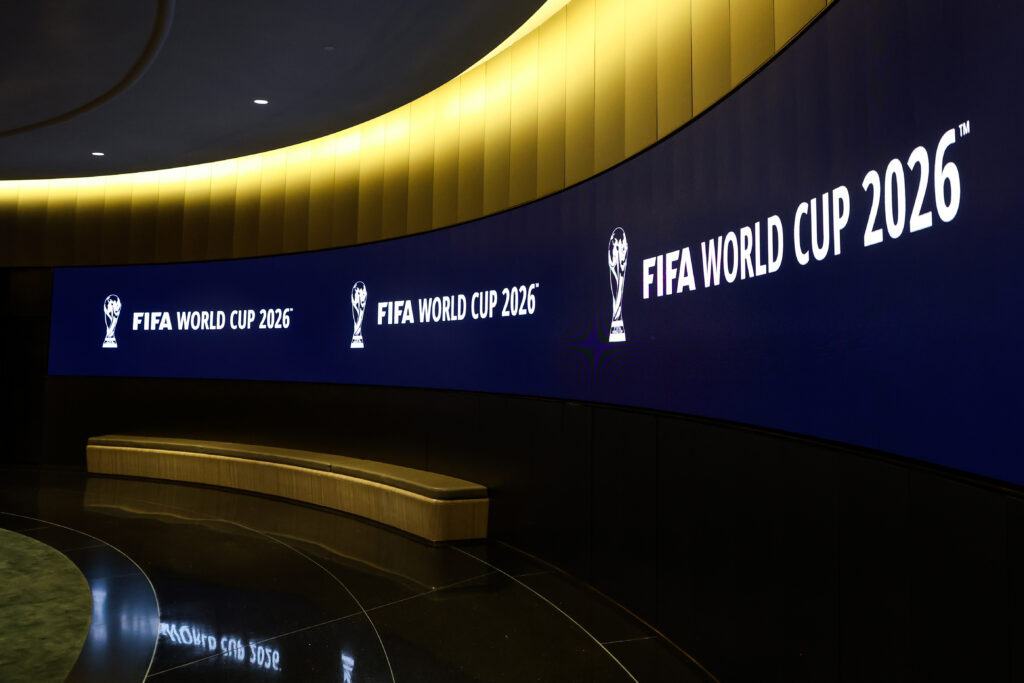
The 2026 World Cup is going to be a betting volume monster: more matches, more markets, more “first-bet ever” customers betting at the best sports betting apps, and more automated action behind the soccer scenes. The real question isn’t whether AI will “pick winners” better. It’s whether AI will turn today’s small edges — timing, latency, price gaps, and decision-speed — into something scalable. As one industry leader notes, this isn’t a future-shock problem. It’s a stress test. Our 2026 World Cup Betting Guide - AI Edition breaks down this interesting topic.
RELATED: 2026 World Cup cities ranked by fan atmosphere
Chris Nikolopoulos, CCO of Betby, framed it this way: “We can see AI as the next stress test — [it] exposes systems built for human speed, not technology speed.” The same tools empowering bettors also empower operators. The winners in 2026 won’t necessarily be the smartest modelers. They’ll be the fastest, cleanest operators — and the bettors who know where the cracks appear during a tournament.

Gambling problem? Call 1-800-GAMBLER or 1-800-MY-RESET (Available in the US) Call 877-8-HOPENY or text HOPENY (467369) (NY) Call 1-800-327-5050 (MA), 1-800-BETS-OFF (IA), 1-800-981-0023 (PR), Call 1-800-NEXT-STEP (AZ), 1-800-522-4700 (KS, NV), 1-800-270-7117 for confidential help (MI). 21+ only. Please Gamble Responsibly. See http://BetMGM.com for Terms. First Bet Offer for new customers only (if applicable). Subject to eligibility requirements. Bonus bets are non-withdrawable and Expire in 7 Days. In partnership with Kansas Crossing Casino and Hotel. This promotional offer is not available in DC, Mississippi, New York, Nevada, Ontario, or Puerto Rico.
AI Offer Sharps At Machine Speed
Experts agree: AI doesn’t magically predict outcomes. It industrializes the sharp’s workflow.
What AI changes for bettors
- Continuous scanning of markets and props
- Instant price comparisons across books
- Faster reactions than a human trader can match
But the bigger point: AI success often comes from exploiting operational gaps — not from forecasting a match better than the market. Nikolopoulos said the vulnerability isn’t the “pricing model” itself. It’s the structure around it: “Pricing models are not the problem … biggest threats are fragmentation … [and] static controls to dynamic behaviors.”
That’s the “machine speed” piece. Automated bettors don’t get tired, don’t miss the timing window, and don’t hesitate.

DraftKings Sports Welcome Offer Ts and Cs: GAMBLING PROBLEM? CALL 1-800-GAMBLER or 1-800-MY-RESET, (800) 327-5050 or visit gamblinghelplinema.org (MA). Please Gamble Responsibly. 888-789-7777/visit ccpg.org (CT), or visit www.mdgamblinghelp.org (MD), 1-800-981-0023 (PR). 21+ and present in most states. (18+ DC/NH/PR/WY). Void in CAN. Eligibility restrictions apply. On behalf of Boot Hill Casino (KS). Pass-thru of per wager tax may apply in IL. 1 per new DraftKings customer. $5+ first-time bet req. Max. $150 issued as non-withdrawable Bonus Bets that expire in 7 days after issuance. Stake removed from payout. Reward issued as $50 in Bonus Bets every 7 days via click-to-claim for 14 days. 7 days = 168hrs. Terms: sportsbook.draftkings.com/promos. Ends 8/23/26 at 11:59 PM ET. Sponsored by DK.
Where Sportsbooks are Vulnerable during a World Cup
Nikolopoulos spoke as part of a web panel about AI's role in World Cup betting, during a wider day-long seminar on Cup wagering hosted by SBC Americas.
1) Fragmented Decision-Making
When trading, risk, CRM, and marketing aren’t aligned, automated sports bettors can find mismatches:
- a promo pushes volume into a market risk wants tightened
- CRM wants VIP treatment while trading wants limits reduced
- risk flags an account but marketing keeps feeding it offers
As Nikolopoulos described it, the structural threat is the fragmentation between systems and strategy, not the existence of AI itself.
2) Static Controls vs Dynamic Behavior
Traditional controls (flat limits, blunt bet delays, static suspensions) were designed for human patterns. AI doesn’t behave like that. It adapts.
3) Time gaps and latency moments
Sharp workflows often target moments where the book’s confidence drops:
- volatile in-play swings
- feed delays
- price updates lagging market movement
- settlement bottlenecks (especially in prop-heavy markets)
That’s where AI can “scale” the exploitation.

Bet365 Sports Welcome Offer Ts and Cs: GAMBLING PROBLEM? CALL 1-800-GAMBLER or 1-800-MY-RESET (AZ, CO, IL, IN, KS, KY, LA, MD, MI, MO, NC, NJ, OH, PA, TN, VA) or 1-800-BETS OFF (IA). Call 1-800-NEXT-STEP (AZ). Call 1-800-9-WITH-IT (IN). CALL 1-877-770-STOP (LA). 21+ only. Please gamble responsibly. Must be present in AZ/CO/IA/IL/IN/KS/KY/LA (select parishes)/MD/MI/MO/NC/NJ/OH/PA/TN/VA. Licensee partner Amelia Belle Casino. Minimum $10 deposit required. Minimum odds -500 or greater. Bonus Bets wager excluded from returns. New customers only. T&Cs, time limits and exclusions apply.
Will Platforms Break Under AI-Driven World Cup Volume?
The group mostly shrugged at the overriding fear of a site going down because of abuse by AI-driven betting patterns.
Ifran Parvez, director of sports at LiveScore, was blunt: “Excess traffic is the one we’d be least worried about.” His reasoning was practical: operators overbuild headroom because the downside of not scaling is too big — and the World Cup’s traffic drivers are still mostly human: hype, results, promos, casual surges.
Ivan Gojic, chief of sportsbook at Entain, echoed the same idea. The familiar bottlenecks aren’t new — they show up weekly — like reliance on “a single source of truth” for certain settlement data or prop feeds.
All three spoke at that SBC Americas web panel.
Nikolopoulos added the more important wrinkle: even if your servers are fine, your book can still feel “unstable” if decisions stay manual. His point: transaction volume isn’t the main challenge — decision speed is. In a World Cup, operators face thousands of near-simultaneous calls (limits, exposure, price moves, suspensions). If those remain slow, customers experience delays and inconsistencies, which is deadly during the biggest betting event on the planet.
'Fight fire with fire': How Operators Will Use AI in 2026
No one argued sportsbooks should sit still. But they also warned against the wrong approach.
Mexico, the United States, and Canada are all playing host to games — the first time three nations will share World Cup duties. The tournament is scheduled to open June 11, 2026, at Mexico City’s iconic Estadio Azteca. Mexico is expected to host matches across three of the 12 groups, with the national team playing all three group-stage games on home soil.
The Guadalajara region — including Zapopan — was considered one of the tournament’s crown jewels. But the recent violence has complicated that narrative.
Don’t Try to Reverse-Engineer the Bettor’s Model
Nikolopoulos called it a trap: don’t obsess over the algorithm — focus on the behavior pattern. AI helps you identify patterns faster, not “read minds.”
Do Use AI to Tighten Operations
The panel’s most practical operator uses for AI:
- behavior pattern detection and anomaly flags
- clustering/segmentation (Ivan noted this was being done years ago)
- risk signals like volatility, price confidence, and latency exposure
- faster operational decisions (limits, suspensions, exposure balancing)
Ivan’s pragmatic take: if a bettor is “super smart,” hire them. “Pay him … bring him into the company and have him figure out your systems.” The best learning often comes from the people who find your weak points first.

theScore Bet Sportsbook Welcome Offer Ts and Cs: Must be 21+ and present in AZ, CO, IA, IL, IN, KS, KY, LA, MA, MD, NC, OH, TN, or VA. Gambling Problem? Call 1-800-GAMBLER (CO, IL, KS, KY, LA, MD, NC, OH, VA). Call 1-800-NEXT-STEP (AZ). Call 1-800-BETS-OFF (IA). Call 1-800-9-WITH-IT (IN), Call (800)-327-5050 or gamblinghelplinema.org in MA. Call or text REDLINE: 800-889-9789 (TN).
Stopping “Bad” Action Without Wrecking Good Business
This was the sharpest tension in the discussion:
Anything you do to block bad action creates friction for good action.
The panel pushed against a binary approach (“ban vs. allow”), and leaned into a graduated model:
- dynamic limits
- selective bet delays
- smarter suspensions at vulnerable moments
- faster exposure/price adjustments
Nikolopoulos stressed that human judgment still matters, especially in B2B ecosystems serving “hundreds of brands” with different risk appetites. You can’t run a one-size-fits-all robot trader and expect it to protect margins and keep the experience clean.
Bettors: What Will AI Realistically Do For You In 2026
Here’s the sober takeaway for bettors: AI can turbocharge the process, but it doesn’t replace the fundamentals. Ifran put it cleanly: on paper, it sounds easy — “just chuck all the historic bets into an AI tool” — but that ignores the lived expertise that still matters.
Where AI will help bettors:
- automate line shopping and alerts
- build faster “value screening” systems
- identify market moves and timing windows
- reduce grunt work (tracking, record-keeping, filtering markets)
Where AI won’t magically help:
- turning randomness (cards, corners, stoppage time chaos) into certainty
- beating efficient 3-way markets just by asking a chatbot
- overcoming a book’s structural edge once limits/delays tighten
The true “AI bettor edge” in a World Cup is often about finding when the book is least confident — and acting fast.

Fanatics Sport Welcome Offer Ts and Cs: 21+. New customers in AZ, CO, CT, DC, IA, IL, IN, KS, KY, LA, MA, MD, MI, MO, NC, NJ, NY, OH, PA, TN, VA, VT, WV, or WY (excludes NY). Apply promotion in bet slip and place a $1+ cash wager (min odds -200) daily for 10 consecutive days starting day of account creation. FanCash rewards will equal the qualifying wager amount (max $100 FanCash/day). FanCash issued under this promotion expires at 11:59 p.m. ET 7 days from issuance. Terms, incl. FanCash terms, apply—see Fanatics Sportsbook app. Gambling Problem? Call or Text 1-800-GAMBLER, 1-800-NEXT-STEP (AZ), 1-800-9-WITH-IT (IN), 1-888-532-3500 (VA), Call (877-8-HOPENY) or text HOPENY (467369).
Why World Cup Books Won’t Win With Just Better Odds
Nikolopoulos hit a very modern truth: casual bettors don’t pick a book because a favorite is priced slightly better. “A casual player is not going to choose … because the odds on Brazil are 0.05 higher.” They choose the best sports betting sites based on:
- fast, smooth UX
- trust (deposits/withdrawals)
- fun, engagement, personalization
- stability under pressure
"They are going to choose based on experience. On offering the best possible platform for entertainment," he said.
Parvez also called out something operators quietly know: “Price elasticity is greatly overestimated.” Translation: the average World Cup bettor is not shopping to shave a few cents off a line. Books can protect margins — if the experience is good.
Gojic added a sharp industry critique: most operators still rely on third-party models, which encourages conservative “hard overround” thinking because they don’t fully trust the inputs.
AI investment vs Marketing: It’s Not Either/Or In A World Cup
Nikolopoulos made the cleanest business-case line of the whole session: AI investment protects your marketing investment. If you acquire aggressively without monitoring and control, you can spend big to attract traffic you don’t want — especially with automated bettors scanning promos and weak points.
Parvez's nuance was helpful:
- smaller operators may prioritize acquisition (volume first)
- larger operators gain more from retention + operational efficiency at scale
Either way, the common thread is ROI: AI that reduces leakages, improves decision speed, and sharpens controls can pay back quickly in a high-volume tournament.

FanDuel Sports Welcome Offer Ts and Cs: Must be 21+ to participate. Gambling Problem? Call 1-800-GAMBLER or visit FanDuel.com/RG (CO, IA, KY, MI, NJ, OH, PA, IL, TN, VA, VT), 1-800-NEXT-STEP or text NEXTSTEP to 53342 (AZ), 1-888-789-7777 or visit ccpg.org/chat (CT), 1-800-9-WITH-IT (IN), 1-800-522-4700 or visit ksgamblinghelp.com (KS), 1-877-770-STOP (LA), visit www.mdgamblinghelp.org (MD), 1-800-522-4700 (WY), or visit www.1800gambler.net (WV). GamblingHelpLineMA.org or call (800) 327-5050 for 24/7 support (MA). Call 1-877-8HOPE-NY or text HOPENY (467369) (NY).
What To Watch For With Sportsbooks & AI In The World Cup
If you’re trying to understand where AI will matter most during the tournament, watch these pressure points:
For Sportsbooks
- in-play latency moments and volatility control
- settlement and prop feed reliability
- consistency between trading/risk/CRM actions
- dynamic limits/delays that don’t trash UX
- segmentation that protects VIPs while managing sharp patterns
For Bettors
- line movement speed across books
- “soft moment” markets (early tournament data gaps, niche props, rapid in-play swings)
- promo mechanics (and how quickly books adjust)
- limits and bet delays tightening as the tournament progresses
The Bottom Line
AI won’t “solve” World Cup betting. It will accelerate the workflows of the people already hunting edges — and force operators to modernize decision-making to match.
Or, in the cleanest summary version:
AI doesn’t win bets by itself — it scales market scanning and timing exploitation — and the operator response is faster decisioning, tighter data pipelines, and dynamic controls that reduce friction for the 95% while containing the sharp 5%.
Gambling problem? Call 1-800-GAMBLER or 1-800-MY-RESET (Available in the US) Call 877-8-HOPENY or text HOPENY (467369) (NY) Call 1-800-327-5050 (MA), 1-800-BETS-OFF (IA), 1-800-981-0023 (PR), Call 1-800-NEXT-STEP (AZ), 1-800-522-4700 (KS, NV), 1-800-270-7117 for confidential help (MI). 21+ only. Please Gamble Responsibly. See http://BetMGM.com for Terms. First Bet Offer for new customers only (if applicable). Subject to eligibility requirements. Bonus bets are non-withdrawable and Expire in 7 Days. In partnership with Kansas Crossing Casino and Hotel. This promotional offer is not available in DC, Mississippi, New York, Nevada, Ontario, or Puerto Rico.
About the Author
 Fanatics NFL Promo Code BOOKIES: Get $1,000 in Matched FanCash
  Top 10 NFL Betting Apps For Week 2: Best American Football Betting Apps For September 2026 Rated
  Caesars NFL Promo Code BOOKIESDYW: Get Double Your Winnings on Your First 10 Football Bets
  BetMGM Bonus Code NFL: Bet $10, Get $150 in Bonus Bets or $1,500 Back in Bonus Bets
  Hard Rock Bet Promo Code: Get $100 in Bonus Bets September 2026
  DraftKings NFL Promo Code: Spend $5, Get $200 in Bonus Bets for NFL Week 2
Comments