
Prediction Markets Impact On Sports Betting Equals 'One Bad Monday Night Football Game' - Analyst


Prediction Markets absorbed the sports betting spotlight in 2025 as they moved to capture their space in the ecosystem. But their bark may outweigh their bite. One gaming industry analyst says the prediction markets impact on sports betting equals 'One Bad Monday Night Football Game'
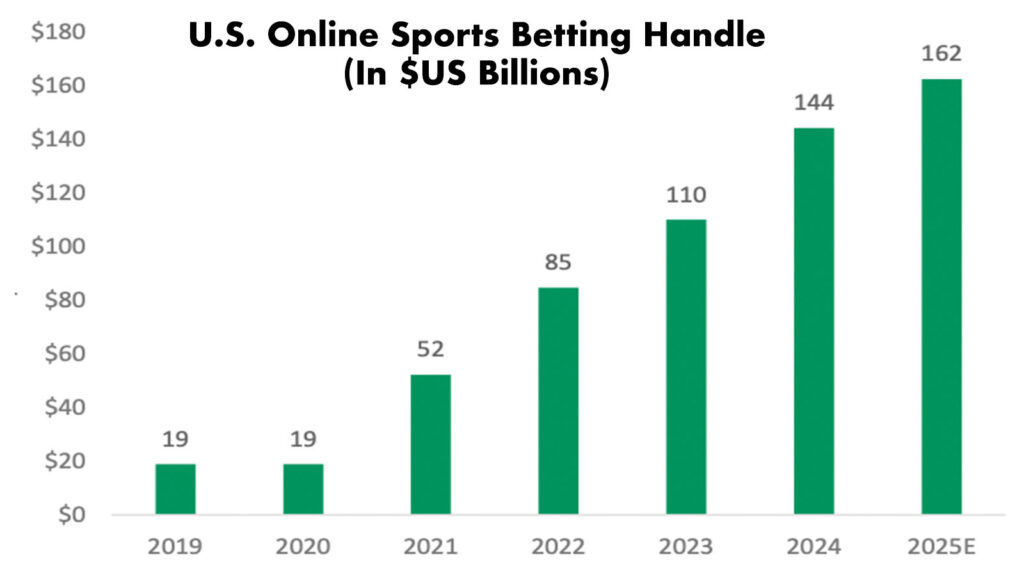
The numbers are in. They show roughly 5% of legal U.S. sports betting handle is now flowing into prediction markets — about $8 billion in annualized volume based on current assumptions, according to data from Juice Reel. From an operator standpoint, that’s largely a wash for sportsbooks already in the game, such as DraftKings, FanDuel, and Fanatics, which launched their own Prediction Market offerings in 2025. The pressure is more acute for operators without one, including theScore Bet, Rush Street, BetMGM, Caesars, and bet365.
"On bad Monday Night Football game could have the same negative result on EBITDA as the total impact the prediction market space is currently having on the sector. Additionally, incremental legalization over time will shrink the prediction market TAM through a superior product offering (OSB), in our view," wrote Citizens Gaming Industry Analyst Jordan Bender.
The impact "is currently proving to be overblown," he added.
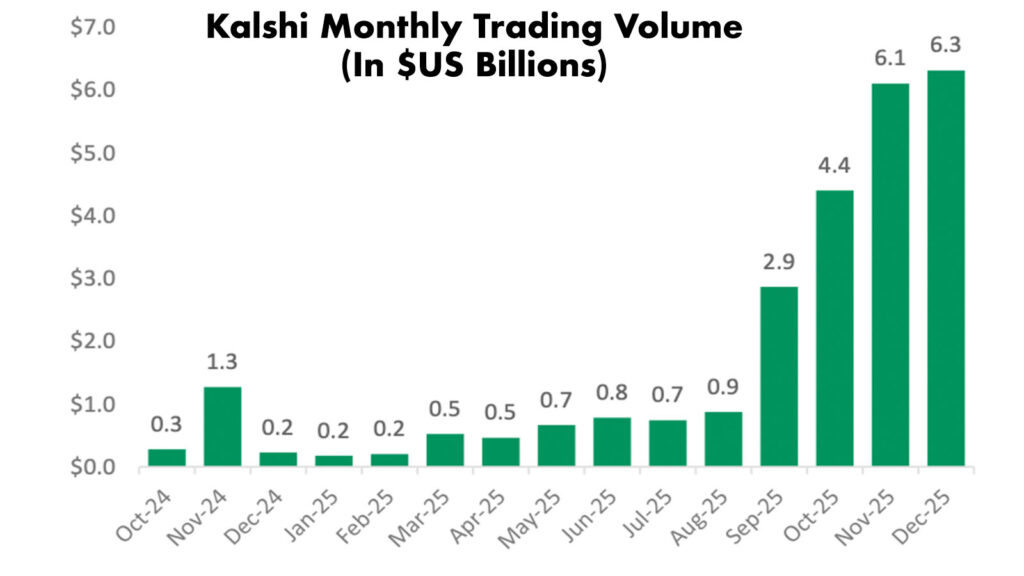
The growth has been eye-catching. Kalshi’s volume surged past $6 billion in November and December, up from under $1 billion before football season kicked off. The company also flipped the switch on broad external marketing — including traditional TV and radio — driving 3.1 million app downloads over the last four months, with 1.3 million coming in December alone, according to data from Citizens. That’s roughly 25% of Kalshi’s lifetime downloads in just one month.
Prediction Market Momentum Leveling Off
But the momentum may be leveling off. Despite new partnerships with Robinhood and Webull, plus media partnerships like CNN and CNBC, and Kalshi's deal with the NHL's Chicago Blackhawks, December volume grew 3% month-over-month. On the plus side for prediction markets, the traditional sportsbook handle typically declines about 3% MoM in December. But, on the bearish side, the spread between volume growth and seasonal expectations is the smallest it’s been since April 2025 — a potential signal that churn may already be creeping in.
We’ve seen this movie before. Caesars’ splashy 2022 launch and PENN’s theScore Bet rollout in 2023 both delivered massive short-term customer acquisition — followed by disappointing retention. Prediction markets could be heading down a similar path. If churn accelerates, the takeaway is either:
- the industry is already seeing peak cannibalization of sports betting, or
- bettors are simply rotating or splitting wallets across the growing number of prediction platforms now on the market.
Nearly a dozen states have engaged prediction markets in either legislation or through cease-and-desist letters. Those headwinds will only stiffen this year.
Where Do Prediction Market Sports Trades Come From?
The Juice Reel data points to a familiar group of heavy-betting states - plus California, which has no legal sports betting. New York, New Jersey, California, Washington, and Ohio rank at the top by prediction-market volume. That said, the dataset can be skewed by larger bet sizes from a smaller group of frequent users, rather than broad-based mass adoption.
And those bet sizes stand out. The average wager/trade on a prediction market site is $185, compared to $55 at regulated sportsbooks, $78 offshore, $62 with traditional bookies, and just $33 in DFS contests. That gap suggests prediction markets are disproportionately attracting higher-dollar, higher-engagement users — at least for now.
While sports events contracts consume between 80-90% of the prediction market trading volume, Citizens sees that leveling off. And sees the long-term growth outside sports.
"We believe prediction markets can generate $10bn of fee revenue at maturity, largely driven by non-sports," Bender wrote.
The Bottom Line For 2026: Impact Notable, But Not Substantive
Citizens reports that the 5% cannibalization figure remains slightly higher than previously expected — but not a stock-moving downside catalyst. DraftKings and Flutter should be able to offset most of the impact through their own offerings over time, Bender wrote. For PENN, Rush Street, MGM, and Caesars, the effect is marginal in the context of their overall businesses. Especially since they are backed by land-based and, in some states, online casinos.
DraftKings and FanDuel (Flutter) stocks are down 12% to 41% from their 52-week highs, but prediction markets account for nowhere near that level of EBITDA pressure.
Longer term, continued state-by-state legalization and litigation should further compress the prediction market opportunity. Regulated online sports betting remains the superior product — and as access expands, the total addressable market for prediction platforms likely shrinks, not grows.
We’ll keep watching the data. For now, prediction markets look more like a speed bump than a roadblock for the sportsbook industry.
 Polymarket Promo Code BOOKIES: Deposit $10, Get a $50 Trading Bonus
  Coral Online Casino Welcome Bonus September 2026: Deposit £10 Get 100 Free Spins
  Best Megaways Slot Games September 2026
  Novig Promo Code BOOKIES: Get a $25 Purchase Match Bonus
  Instant Withdrawal Online Casinos USA September 2026: Fastest Payout Casinos Rated
  Best Progressive Jackpot Slots Online for US Players 2026
Comments