
Prediction Markets Explained: How Have They Impacted Sports Betting, Our Culture & What's Next?


LAS VEGAS - A year ago, prediction markets held sway over a handful of tech types and data devotees as an alternative method to political polls following the 2024 election. As 2025 wraps, legal prediction markets have grown into a "existential threat" to legalized gambling and as a emerging economic ecosystem, one many believe could change financial markets operated in a way not seen since the dawn of the internet.
Prediction markets are platforms that allow users to trade shares based on the outcome of events such as elections, award shows, economic trends, weather phenomena, cultural benchmarks, stock and commodities markets, government data, health trends, news developments and - most lucratively - sports.
The Commodity Futures Trading Commission (CFTC)—a federal agency— governs trading markets. This differs from legal sportsbooks and betting apps. Those platforms face taxation and regulation on a state-by-state basis. Often working under hundreds of rules and regulations in each distinct jurisdiction. States tax online sports book operators anywhere between 15% and 51% of their net revenues.
Coming in 2026: Casino Gaming-Based trades - at least according to multiple industry sources who spoke to Bookies.com. "They're not sure yet how they're going to do it, and I've advised them against it, but they want to do it," said one top industry legal consultant who has worked with prediction markets.
The potential of prediction markets now appears only limited now by litigation and regulation.
That means potential trouble for all forms of legal gaming - especially sports betting. How great is the potential threat? Think of that big casino or posh retail sports book as the old neighborhood Blockbuster Video. And prediction markets as Netflix.
Opponents of prediction markets see them as an unregulated, illegal and ominous threat to the future of legal sports betting - if not all casino gaming. To their proponents, prediction markets are a gateway to a new media and cultural landscape that offers both a glimpse into the future and a way profit upon it.
Their unbridled growth in users, valuation, trading volume, cultural imprint and litigation continued throughout 2025. Bookies.com spent 2025 reporting on the ascension of prediction markets. Nearly two dozen sources were used in this story, in addition to on-site reporting from here, Florida, Puerto Rico, Boston and New York.
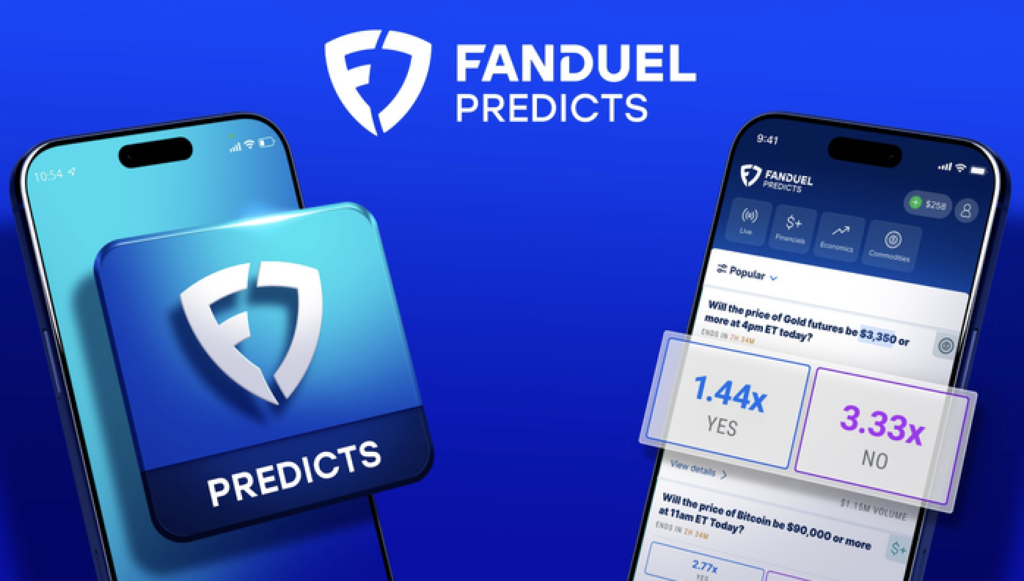
Prediction Markerts Enjoy Stratospheric Growth In 2025
Because prediction markets like Kalshi sit under federal control, they are exempt from the state-level rules and taxes that apply to legal sportsbooks and iGaming operators.
In November, Kalshi and Polymarket combined for more than $9.5 billion in trades, with roughly 90% of that volume coming from sports event contracts. Kalshi's numbers grew to $5.8 billion in November, a 44% increase from the previous month. Polymarket clocked in with $3.47 billion in trades. And not a penny was collected by any U.S. state in gaming-related taxes form it.
According to data compiled by Citizens, Kalshi had more than 900,000 app downloads during the first three weeks of December. That coincided with the NFL season, college football conference championships and the first round of the College Football Playoff. During Week 15 of the 2025 NFL season, for example, Kalshi had 305,000 downloads. That compares to 183,000 from FanDuel and 179,000 from DraftKings
Litigation, Missteps Have Not Slowed Progress
The stratospheric growth has not come without missteps. Prediction markets remain embroiled in litigation against more than a half-dozen states and regulatory bodies, mainly due to sports event contracts. The platform has been called "prohibited gambling" by the NFL, and "catastrophic" by NCAA President Charlie Baker.
On Dec. 17, Kalshi self-certified to take trades on NCAA players entering the transfer portal. The reaction was fast and furious. The operator backtracked by saying on social media: "We certify markets all the time that we do not end up listing. We have no immediate plans to list these contracts."
In a response to bookies.com, Kalshi offered the following exampled of certified markets it has yet to offer: "L2CHAINS, about the amount of dependent blockchains a certain Layer 1 blockchain will have; CAWATER, about the amount of water the state of California will allocate to the state water project; and DEEXTINCTSUCCESS, about whether or not another animal will come out of extinction."
Operators argue that prediction markets aren’t "gambling" because customers aren’t wagering against the house. Instead, they’re trading on binary outcomes with other users. Critics —including many legal sportsbooks, Native Tribes, and legacy casino and gaming operators — say it’s merely gambling in disguise.
How Do Prediction Markets Make Money?
In a word: "volume." Sports books collect money when patrons lose their wagers, and pay out when they win. Books set odds that often create enough of a spread so that they'll usually make a profit on most outcomes.
Prediction markets, however, merely facilitate trades. They collect a fee, usually between 1% and 2% of the amount of each trade. The fee grows as the percentage of an outcome rises. So, for example, someone who makes $1,000 on a trade based on an event with a 90% probability will pay a slightly higher fee than someone who makes $1,000 on a trade based on a 10% probability.
Overview Of Prediction Markets in the U.S.
Here are some legal prediction markets of note in the United States and the types of trades they offer:
| prediction market | Key details |
|---|---|
| Kalshi | Politics, economics, finance, pop culture, weather, and sports. Lots of sports. In all 50 states |
| Fanatics Market | Sports, finance, politics, economics and culture markets available. Initial launch in 24 states, including FL, TX, and CA. |
| Polymarket | Politics, economics, finance, pop culture, weather, and sports. Soft launch underway in U.S. |
| DraftKings Predictions | Politics, economics, finance, pop culture and sports. Markets vary by state. Will not offer sports in states in which it currently operates. |
| FanDuel Predicts | Politics, economics, finance, and sports. Markets vary by state. Will not offer sports in states in which it currently operates. |
| Prediction Picks (Underdog) | Sporting events. |
| Sporttrade | The only regulated sports betting exchange; available in NJ, AZ, VA, CO, IA |
| Crypto.com | Sports-related event contracts |
| Interactive Political | Economic and financial markets |
| Robinhood | Sports, political, and economic questions (Sports contracts not allowed in NJ) |
How Do Legal Prediction Markets Work?
Trading in a prediction market involves buying an “event contract.” If your predicted outcome occurs, the contract pays out $1 per share. Traders can buy in at prices ranging from 1 cent to 99 cents, depending on the perceived likelihood of the outcome. Many prediction markets accept cryptocurrency or run exclusively on it. Legal U.S. sportsbooks and sports betting apps outside of Wyoming, Colorado, and Virginia do not allow wagers funded by cryptocurrency.
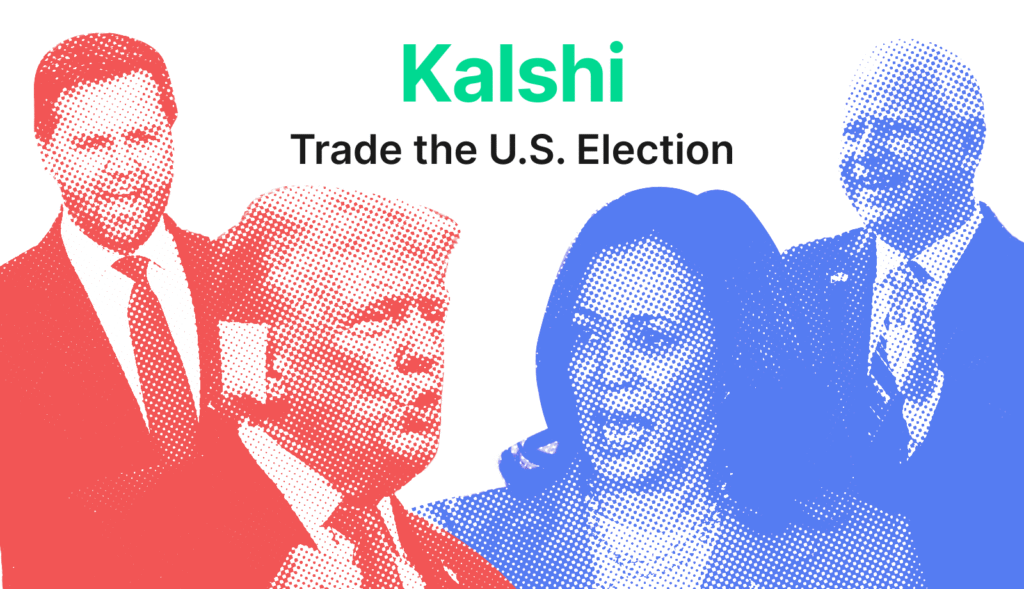
How Are Legal Prediction Markets Regulated?
The CFTC oversees legal prediction markets and has designated some, including Kalshi, as Designated Contract Markets (DCMs). The agency’s role includes ensuring market transparency, efficiency, and the prevention of fraud.
The process of becoming a DCM involves submitting a detailed application to the CFTC that outlines the applicant’s compliance with 23 core principles outlined in the Commodity Exchange Act, 7 U.S.C. § 1 et seq.
They include:
• Compliance with the Law – The exchange must follow the CEA and CFTC regulations.
• Governance and Oversight – It must have fair and transparent governance structures.
• Market Transparency – Trading information must be publicly available.
• Fair Market Access – The market must provide equal access to traders.
• Prevention of Market Manipulation – Strong surveillance mechanisms must be in place.
• Contracts Must Be Well-Defined – Futures and options contracts must be clear, enforceable, and financially sound.
• Financial Integrity – Must ensure proper risk management and margining processes.
• Dispute Resolution – A process for resolving market participant disputes must exist. After approval by the CFTC, a DCM must submit regular reports to the CFTC, undergo periodic audits and inspections, and adapt to rule changes and new regulatory requirements.

What Is the Future of Prediction Markets?
For now, they’re here to stay.
Prediction markets were a major topic of conversation at the 2025 Global Gaming Expo here in October. American Gaming Association president Bill Miller called them "a clear and present danger" to regulated sportsbooks.
Polymarket accounts are funded by crypto, letting users outside the U.S. wager on everything from elections to entertainment to global oddities. CEO Shayne Coplan told 60 Minutes his platform's real power is its ability to turn collective user behavior into fast, crowd-sourced probability signals.
“It’s the most accurate thing we have as mankind right now, until someone else creates some sort of a super crystal ball,” Coplan said.
A $2 billion investment in Polymarket by the Intercontinental Exchange (ICE), the parent company of the NYSE, placed the company's valuation at $9 billion. Polymarket expects to fully launch in the U.S. in the coming months.
Polymarket now runs roughly 15 categories with more than 10,000 active markets at any given moment. Its political boards exploded during the 2024 presidential race, drawing an estimated $3.6 billion in action.
It began a limited U.S. launch to customers on Dec. 3.
Kalshi touts an $11 billion valuation. It offers customers in all 50 states cash and crypto funded accounts. The company was founded by "MIT math nerds" Tarek Mansour and Luana Lopes Lara. On consecutive days in December, Kalshi announced media partnerships with CNN and CNBC.
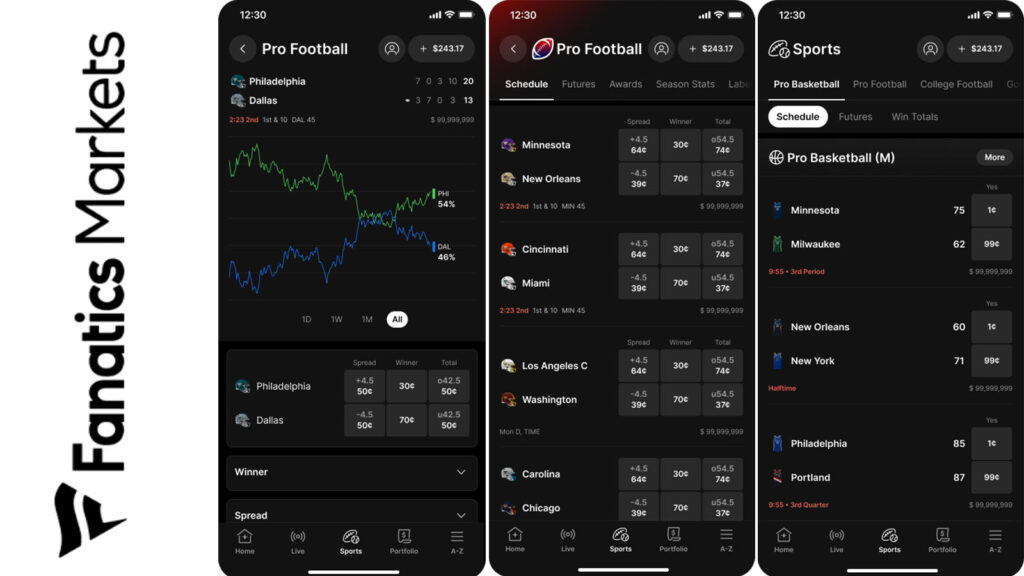
Sports Betting Operators Jump Into Prediction Market Space
Online sports betting operators DraftKings, FanDuel and Fanatics fired up prediction platforms in 2025. Those operators mostly abstain from offering sports event contracts in states that currently allow sports betting and/or where they do not currently operate.
Fanatics Market launched on Dec. 3 and is now live in 24 states. Boston-based DraftKings Predictions went live in 38 states with sports event contracts available in 17 states on Dec. 19. Those full-market states include California, Texas, and Florida. And three days later, FanDuel Predicts followed in five states, with a larger rollout planned for 2026.
Sport-betting related stocks took a major hit after two seismic events on Sept. 29, That day, Robinhood announced $2 billion in prediction market trades during Q3. That evening, Kalsh began taking so-called NFL "combo" trades - akin to betting parlays - on both Monday Night Football games being played (Miami Dolphins vs. New York Jets and Cincinnati Bengals vs. Denver Broncos.) The next day, shares of DraftKings fell nearly 12%. And the price of FanDuel's parent fell 11%.
Some Exit Sports Betting, DFS For Prediction Markets
DraftKings and FanDuel gave up their licenses in Nevada in order to enter the prediction market space. Underdog walked away from a sports betting license in Missouri because it launched Prediction Picks - in partnership with Crypto.com. The site lost its Daily Fantasy Sports (DFS) license in Arizona and exited from the North Carolina sports betting market.
Both FanDuel and DraftKings said they will stop trading sports event contracts in any state that subsequently legalizes sports betting.
The decision to enter prediction markets opened the door for both DraftKings and FanDuel to exit the American Gaming Association, the industry's top trade organization. That was the sports betting equivalent of Michigan and Ohio State leaving the Big Ten.
Others are taking a more cautious approach."We're not interested in doing anything that's not legal," PrizePicks Senior Director of Responsible Gaming Phil Sherwood told Bookies.com during the National Council of Legislators from Gambling States (NCLGS) Winter Meeting in San Juan Puerto Rico in December. His company partnered with Kalshi to offer Kalshi's contracts through the PrizePicks' platform.
Many legacy gaming operators remain wary of prediction markets. Bet365’s Head of Development Trip Stoddard follows the daily doings of prediction markets on his phone. He told Bookies.com that prediction markets “offer an existential threat” to the legal sports betting space, but added company has no plans to join the that party any time soon.
Regulators Draw Line In Sand
Ohio First Assistant Attorney General Jonathan Blanton added at the NCLGS meeting that the issue of prediction markets trading sports events contracts belongs under the jurisdiction of the states.
"We're engaged with our Kalshi friends, but Pork bellies and sports contracts are not the same," Blanton said. "Oversimplification of the issue is a massive danger. This is a state regulatory issue and there's a slice that belongs to the states and we're going to fight for it."
The decision of online sports betting operators to prediction markets poses a difficult challenge to regulators who want to limit prediction markets but don't want to stifle operators in their own states.
"We are taking a cautious approach to this but we are always focused on the patron, first," Massachusetts Gaming Commission Chair Jordan Maynard told Bookies.com. "Remember, we can get a patron with a legit dispute their money back from a licensed operator. We can't from a prediction platform."
Regulators in Arizona, Massachusetts, and Michigan have issued public statements saying that any operator licensed in their jurisdiction (including Fanatics, DraftKings and FanDuel) could see their licenses put in jeopardy if they engage in sporting event contracts in any state. Any operator that offers such contracts could be subject to potential license suspension or revocation.
Prediction Markets Battle States In Court
In May, the CFTC withdrew its own appeal in a case before the U.S. Court of Appeals in the D.C. Circuit. This allows prediction markets to continue operating in their current form—at least until a new court ruling emerges. Or federal legislation offers more precise definitions.
Kalshi received cease-and-desist orders from Connecticut, Arizona, Illinois, Montana, and Ohio in 2025. It's embroiled in ongoing litigation against New Jersey in the U.S. Court of Appeals for the Third Circuit, and (with Robinhood) against the Massachusetts Attorney General in Suffolk Superior Court. It remains entangled in court with regulators in Maryland, New York, and Nevada. In November, Kalshi won a ruling to avoid geo-fencing around some tribal lands in California.
""As other courts have recognized, Kalshi is a regulated, nationwide exchange for real-world events, and it is subject to exclusive federal jurisdiction. It's very different from what state-regulated sportsbooks and casinos offer their customers. We are confident in our legal arguments and have filed suit in federal court,” a company spokesman told bookies.com following Connecticut's cease-and-desist order. The company has issued similar statements concerning other legal actions taken against it.
Gaming legal expert and Florida attorney Daniel Wallach contends that sports-related prediction contracts may violate federal law. He contends Kalshi reversed its prior legal arguments used to support election markets.
“They’ve shifted 180 degrees, calling event contracts financial instruments,” Wallach said at the SBC Summit Americas on May 15 in Fort Lauderdale, Florida. “At best, Kalshi is gaslighting everyone. At worst, they’re changing their story. They can’t have it both ways.”
Wallach continued his crusade argument against prediction markets engaging in sports events contracts at the NCLGS Winter Meeting in December.
"Prediction markets pose a different threat to states. They have the backing of White House, Wall Street, Silicon Valley and every white-shoe law firm in the U.S," Wallach said. "It's the ultimate "David & Goliath" fight. There was no Congressional intent to allow sports contracts when Dodd-Frank was passed."
"It has all the makings of potential Supreme Court case," added former U.S. Attorney Greg Brower, now of Brownstein, Hyatt, Farber & Schreck.
Natvie Tribes Play Key Role In Legal Battles
Tribal leaders have become among the most outspoke critics of prediction markers offering sports event contracts. Gaming on native lands is governed by federal law under the Indian Gaming Regulatory Act (IGRA).
Rodney Butler, Chariman, Mashantucket Pequot Tribe Nation said at the NCLGS Winter Meeting that prediction markets put "at risk billions of dollars in tax revenue." He added that users can trade using Kalshi to trade sports event contracts within the geofenced area of his Tribe's nation in Connecticut.
"The Tribes have a special relationship with the federal government. They have a big dog in this fight," Brower added.
Prediction markets remain "a big, serious issue" for Native Tribes, said Dan Little, Intergovernmental Affairs Officer for the Yuhaaviatam of San Manuel Nation in California.
Wallach believes the involvement of tribes has been a catalyst in turning the tide in the fight against prediction markets and that their support buttressed cases in Massachusetts, Nevada, and elsewhere.
“For us, it’s not a federal vs. state issue,” Oklahoma Indian Gaming Association (OIGA) Chair Matt Morgan said.
“This is a threat to our revenues and our communities,” added Little. “Anytime tribes have had something valuable, someone has been there trying to take it.”
On that same NCLGS panel, FanDuel Director of Government Affairs Jay Atkins hit back against those labeling prediction markets as "illegal." This came after FanDuel announced its plan to launch its prediction market, but before its launch.
“Prediction markets are, in fact, not illegal at all,” said Atkins. “They are regulated by the CFTC. The question the courts are wrestling with is whether sports contracts are proper derivative contracts or gaming regulated by the states.”
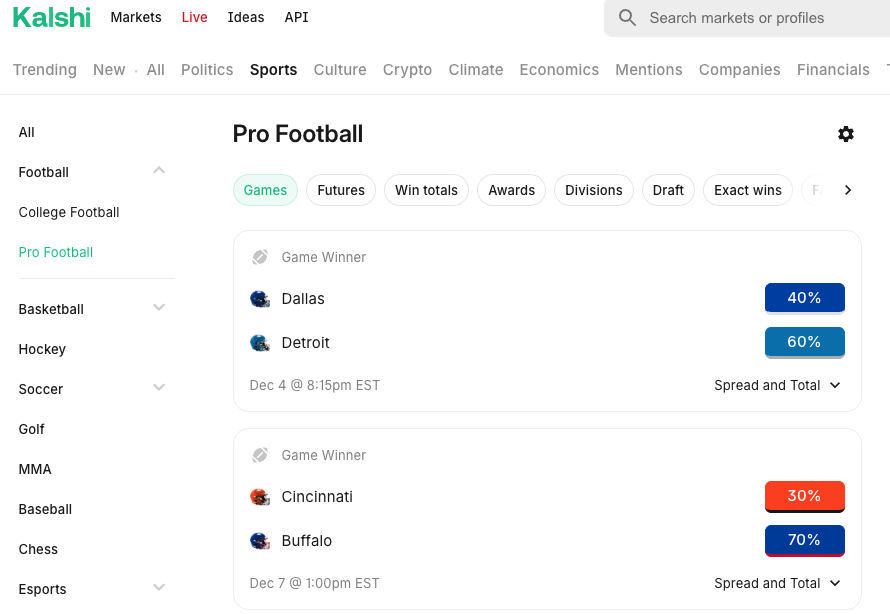
The Argument In Support Of Prediction Markets
Prediction markets are legally accessible nationwide, depending on the operator. They offer those over 18 in non-legal-sports betting states a way to engage in "trades" on games not legally available elsewhere — avoiding offshore and illegal platforms. Operators avoid state taxes and fees that traditional sportsbooks and iGaming platforms must pay. In some cases that means better odds than a regulated sports book, but not always.
Political bets attracted hundreds of millions in trades during the 2024 election cycle, and in some cases foretold the outcome of the presidential election more accurately than pollsters. Prediction markets remain active in real time, moving immediately as each trade is executed. Sports betting sites and apps, meanwhile, have access to live data feeds and therefore can halt betting in certain markets before bettors can react.
Sports books are continually blasted by bettors and regulators for limiting players who tend to win. Massachusetts on Dec. 18 passed the first such regulations aimed at curbing books who limit winning patrons. Books routinely void or attempt to void wagers for a multitude of reasons. The Massachusetts Gaming Commission, at that same meeting , thwarted a request by DraftKings to void nearly $1 million in payouts. DraftKings claimed a "technical error" on its end.
The Best Legal Case For Prediction Markets
Attorney Andrew Kim of Goodwin Law shared his best legal case for and against predictions markets with Bookies.com. Here's his brief case in favor:
The Commodity Exchange Act says that the CFTC has “exclusive jurisdiction” over swaps traded on a designated contract market. The prediction markets have argued that their event contracts are “swaps,” and that “exclusive” means exclusive—that states have no role to play in regulating the markets that fall within the CFTC’s charge. Whether event contracts violate state law because they’re unlicensed bets, wagers, or gambling is irrelevant—state law cannot prevent exchanges from engaging in activity permitted and regulated under federal law. Allowing states to regulate the activities of prediction markets would wreak havoc on a uniform, national derivatives market. There are also too many differences between the CFTC’s rules and the requirements of state gaming commissions—it is practically impossible to comply with both. - Andrew Kim
The Argument Against Prediction Markets
Nearly all the legal opposition to prediction markets comes from sports event contract trades. Legal sportsbooks use sophisticated tech and integrity agreements with professional sports leagues to ensure transparency and compliance. Trading platforms have begun to use some of the same integrity providers as sports betting sites. But they are all self-regulated in that sense, as opposed to books that have to follow set laws, rules, and regulations built around sports betting.
Nevada submitted 18 defenses in its legal battle. Its overall claim asserts that federal regulations cannot trump state gaming regulations.
The AGA's Miller, speaking during his 2025 G2E keynote address here at the Venetian Expo, slammed prediction markets for skirting the rules under which legal and licensed books operate.
“They want the opportunity, but they don’t want any of the regulatory compliance,” Miller said of prediction markets and sweepstakes sites. “Many of them don’t want to play by the rules that made gaming what it is today. Illegal operators want to end-run regulation. All of you, each and every one of us in this room, abides by rules. They attempt to blur the lines by not following them.”
In all, 36 states attorneys generals have filed amicus briefs in support of New Jersey's case against Kalshi.
Because many prediction markets accept cryptocurrency, it’s harder to trace users or those funding trades. Several states have launched legal actions arguing that sports contracts are on these platforms. They simply offer a new form of sports betting and should face the same regulatory and tax concerns, the suits claim.
The Best Legal Case Against Prediction Markets
And here's Kim's case against predictions markets, especially when it comes to sports event contracts:
In the states’ view, event contracts are bets or wagers—the risking of money for the opportunity to win more money, based on the result of an event outside of the parties’ control. Although the Commodity Exchange Act allows designated contract markets to offer event contracts, those markets must still comply with state law, including state gaming and gambling laws. The states acknowledge that the Constitution—through its Supremacy Clause—says that federal law trumps state law, but they argue that Congress did not clearly state that state gaming and gambling laws have no role to play in regulating these contracts where there is overlap. After all, for centuries, the states have been primarily responsible for regulating gambling—not the federal government. Given the longstanding tradition of allowing states to regulate bets or wagers, the Commodity Exchange Act needs to be particularly clear that the states have no role to play. It isn’t, so the prediction markets must answer to both the CFTC and the states. - Andrew Kim
Pro Leagues Remain Split On Prediction Markets
Kalshi teamed with the NHL, while UFC and TKO are now aligned with Polymarket. Kalshi, subsequently, cut a separate marketing deal with NHL's Chicago Blackhawks.
The NFL said prediction markets "constitute prohibited gambling" in a gambling-related memo to its teams on Nov. 13.
"We are particularly troubled that several sports-related futures contracts have been launched nationwide, including in jurisdictions where sports betting has not been legalized," Jeff Miller, an executive vice president for the NFL, added in written Congressional testimony to the House Agriculture Committee in December. "These contracts fall outside the purview of state regulatory authorities and the safeguards they impose upon the industry."
During the Associated Press Sports Editors' Commissioners meetings in New York on April 28-29, major league commissioners and Baker expressed opposition to prediction markets when asked about them by Bookies.com. Especially given their use of cryptocurrency in funding wagers.
At that time, Baker called them a “grey area” and “part of the problem.”
Silver 'Concerned About Integrity Protections'
NBA Commissioner Adam Silver was more direct:
“These new trading markets, we're watching them very closely. We are not participating in them. We are not accepting advertising money from them” Silver said in response to a question from Bookies.com. “I am concerned about what integrity protections are in place for those trading platforms. And our strong preference again would be for those to be regulated markets. We think that puts us in the best possible position.”
Three days later, the NBA sent a letter to the CFTC voicing its concerns. That followed a similar letter previously sent by MLB.
"Those are complicated. It concerns me. Futures markets. Legalize betting. I don't see a lot of difference . The reasons that the futures markets concerns me is they're not the same kind of regulations in place that there are in respect to sports betting," MLB Commissioner Rob Manfred said in a response to a question from Bookies.com. "If they're going to let it happen. It seems to me it's got to be regulated sort of the same way as legalized sports betting."
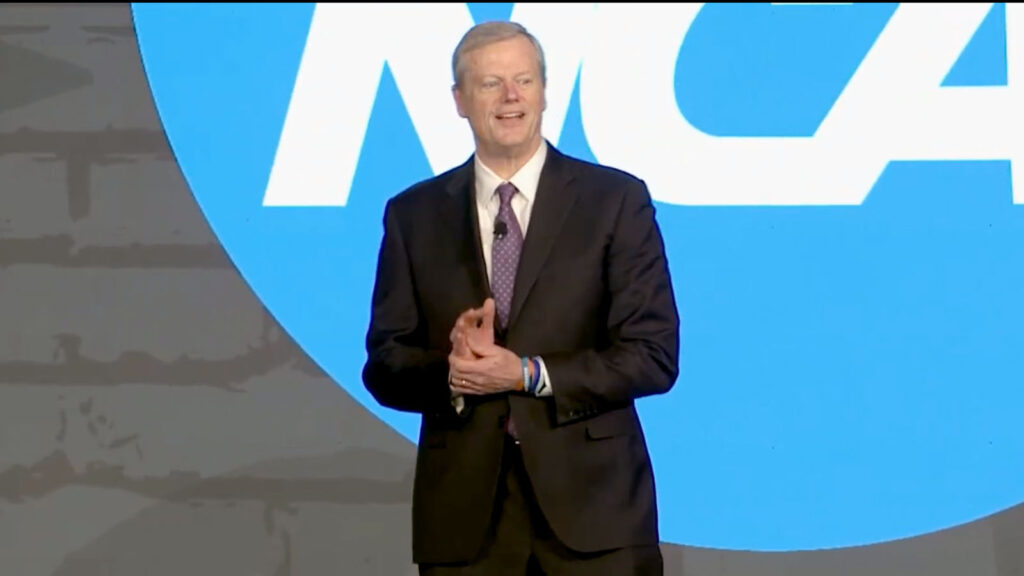
NCAA President Calls Them: 'Catastrophic'
Baker further blasted prediction markets in Dec. 18 after Kalshi self-certified itself to offer contracts on whether players would enter the transfer portal. Earlier in December, he termed their potential effect on college sports as "catastrophic."
“The NCAA vehemently opposes college sports prediction markets. It is already bad enough that student-athletes face harassment and abuse for lost bets on game performance, and now Kalshi wants to offer bets on their transfer decisions and status — this is absolutely unacceptable and would place even greater pressure on student-athletes while threatening competition integrity and recruiting processes. Their decisions and future should not be gambled with, especially in an unregulated marketplace that does not follow any rules of legitimate sports betting operators," Baker wrote in a post on X.
Kalshi later clarified that it had no plans to offer any contracts on players who may or may not enter the portal.
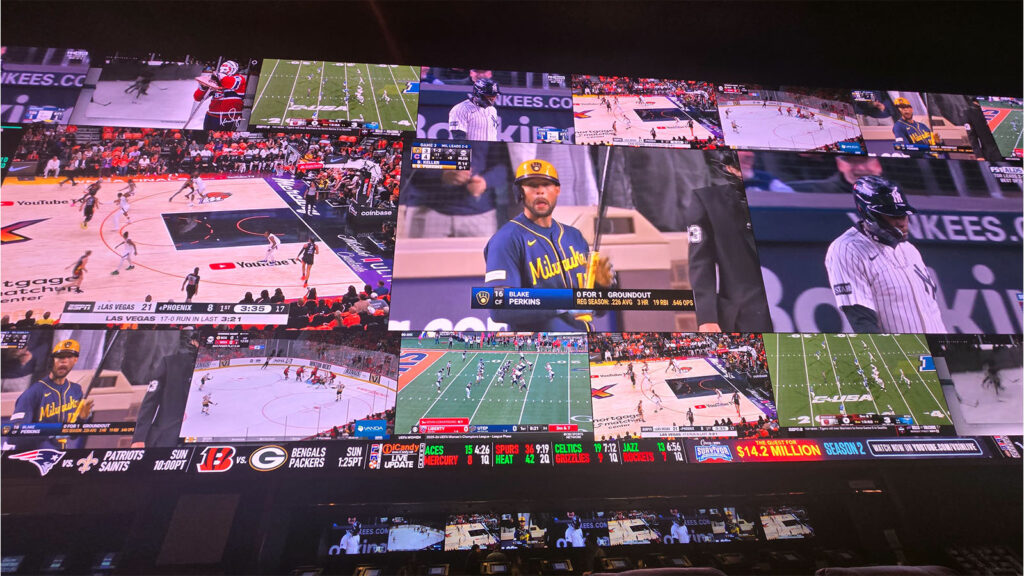
How Prediction Markets Differ From Sports Betting
Both allow people to place a stake on the outcome of an unknown event for the chance to win money. Prediction markets fit individuals on opposite sides of a single trade. In sports betting, everyone on both sides of any outcome is wagering against the house.
Prediction markets are similar to parimutuel betting in that the price on each outcome is based on the money traded. Any and all changes in odds (or pricing) are determined by trading volume.
In sports betting, the house sets odds influenced by multiple factors.
In football, those factors include the strength and weaknesses of each team's offense, defense, special teams, coaching, weather conditions, and key injuries. Those are usually transformed into a power rating that assigns a number to each team. The line is usually the difference between those two numbers. Lines move based not so much on the amount of money being wagered, but who is wagering it. Big plays by so-called "sharp" (or professional bettors) carry a much greater impact than simple public sentiment.
States regulate sports betting operators, often using hundreds of separate rules and laws.
Since the Supreme Court overturned the Professional and Amateur Sports Wagering Act (PASPA) in 2018, a total of 39 states and Washington, D.C., have legalized sports betting. Each state sets its own rules, regulations, and tax rates.
The CFTC regulates prediction markets, and they face "relatively light regulations," according to the Massachusetts Gaming Commission.
Making The 'It's Sports Betting' Argument
In a brief presented to the MGC at its May 22 meeting, MGC staff offered the following difference between sports betting and prediction markets:
- Individuals can participate in prediction markets starting at age 18 (versus 21 for sports
wagering in most states), - There are no mandatory responsible gaming features such as deposit limits, wager limits
limits, self-exclusion tools, or cooling-off periods required of DCMs - DCMs can “self-certify” new markets by simply sending a “certification” letter to the
CFTC, one day before offering a market, and the market launches automatically
absent CFTC action - Tax treatment of gains from event contracts differs from gambling winnings
- States receive no tax dollars from DCMs. DCMs such as Kalshi pay taxes on their business income as a for-profit business entity
- AML standards for DCMs are not as strict as the regulated gaming space (generally not
subject to the Bank Secrecy Act, no obligation to file suspicious activity reports) - KYC protocols are minimal when compared to gaming operators (only name, address and a social security number required to create an account.
Many of these points were raised in Massachusetts Attorney General Andrea Campbell's lawsuit against Kalshi, which is snaking through federal and state courts. Connecticut used similar language when it filed its "cease-and-desist" order on Dec. 3.
How Are Prices Calculated?
The prices displayed on prediction market sites mark the middle of the current bid-ask spread.
Initial Price
- When a market is created, there are initially zero shares and no pre-defined prices or odds.
- Market makers (a fancy term for traders placing limit orders) interested in buying YES or NO shares can place Limit Orders at the price they’re willing to pay
- When offers for the YES and NO side equal $1.00, the order is “matched” and that $1.00 is converted into 1 YES and 1 NO share, each going to their respective buyers.
For example, if you place a limit order at $0.60 for YES, that order is matched when someone places a NO order at $0.40. This becomes the initial market price.
The Taxation Of Prediction Markets Income
Profits earned in prediction markets currently receive the same tax treatment as any other form of income. Meaning this: If you earn it, you report it. The IRS has yet to issue formal guidance on how it will consider gains and losses from prediction-based trades.
Platforms are supposed to issue 1099-MISC forms annually to users for tax filing purposes. As always in these cases, consult with a tax advisor for your own particular case.
What To Expect When Trading On A Prediction Market?
As is the case with any sports betting platform, sports event contract traders should only trade what they can afford to lose. And do so for entertainment, as opposed to investment, purposes. Kalshi offers the most robust and largest platform available in the U.S. Trades execute quickly. And users can monitor trades and movements in each market in real time.
DraftKings Predictions, FanDuel Predicts, and Fanatics Market offer a user experience similar to their online sportsbooks. Those operators along with Kalshi, Robinhood, and most others accept direct deposits from multiple U.S. financial institutions via debit cards, bank transfers, or wire transfers. Kalshi also takes crypto, but with a $500 max per day. Other platforms have much larger crypto limits. Payouts come in fewer than three business days. Most platforms pay accrued interest on your cash and open positions.
Not all operators will offer the same contracts in every state.
Gaming Industry, Prediction Markets 'Will Find Harnomy'
What's next?
Sporttrade is the only platform to request CFTC approval to expand nationwide.
Sporttrade CEO Alex Kane, speaking to Bookies.com at SBC Summit Americas, said he believes the gaming industry will eventually find harmony among sportsbooks, regulators, leagues, and prediction platforms.
“The type of activity you're talking about here is not the super high hold. It’s not the 10, 20, 30% hold, same-game parlay stuff. And that's where the states make all their revenue, and that's where the books make all their revenue,” Kane said. “My dad bets $10 at a time on DraftKings on the money line. Do you think he's the type of customer they make money off of? No. It's the people that do 7-, 10-, 20-leg parlays. Right? And that's not going anywhere.”
“We literally partner with NASDAQ, protecting traders on Sporttrade the same way your 401(k) is protected,” Kane said.
"And DCMs have that same requirement. So they find it interesting, wow, ‘This is a $10,000 order from a participant that 10 seconds later the price really moved. Right?’ You could start an investigation (because of that). I think all the things about customer protection, responsible gaming, and integrity could be addressed in 45 minutes," Kane said. "Leagues and DCMs could come together and draft the '10 Commandments of Customer Protection and Match Integrity' and get something that is amazing."
Kane remains upbeat:
“It’s a very solvable thing. States and leagues are interested in this space," he said. “No one sues NASDAQ for insider trading — it’s just the exchange. If the leagues align with the exchange, they’re not taking on financial risk. This presents a very interesting opportunity.”
About the Author
 Highbet Free Bet Offer September 2026: Get up to £60 in Free Bets
  Rialto Casino Welcome Offer September 2026: Spend £10 Get 100 Free Spins
  Dream Vegas Promo Code UK September 2026: Claim up to £50 + 50 Free Spins
  Best Low Deposit Casinos UK September 2026: Low Minimum Deposit Casinos
  Giants at Rams: Best Sportsbook Promos, DFS Sites and Prediction Markets for Monday Night Football
  NetBet Welcome Bonus September 2026: Get £20 in Free Bets