
Nevada Moves To Block Kalshi As State-Federal Fight Over Prediction Markets Escalates

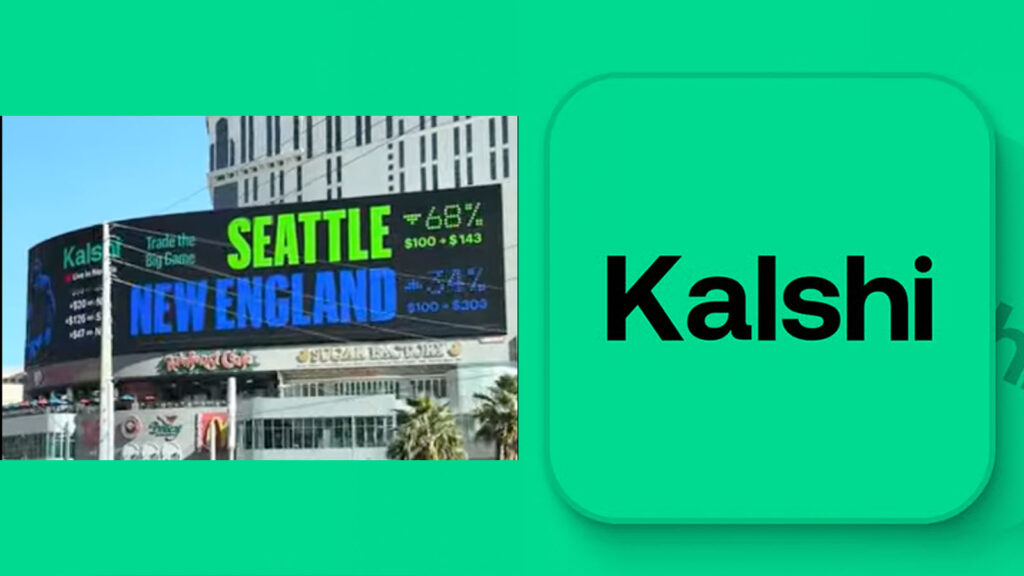
Nevada — the birthplace of legal U.S. sports betting — is once again drawing a hard line in the sand as the fight between Nevada and the prediction market Kalshi rages in state and federal court.
On Tuesday, the state’s Gaming Control Board moved to block Kalshi from operating in Nevada, filing a civil enforcement action in Carson City District Court following a ruling from the U.S. Court of Appeals for the Ninth Circuit that sided with state regulators.
Kalshi and the state subsequently swapped legal motions. Nevada filed an emergency motion to remand its civil enforcement back to state court on Wednesday after Kalshi removed it to a federal court.
This follows a similar back-and-forth that occurred in Massachusetts. There, Attorney General Andrea Campbell got a preliminary injunction issued by a district court judge that demands Kalshi geofence its sports-based trades out of Massachusetts by March 8. An appeal is pending.
The Gaming Control Board decision backs a November federal court order requiring Kalshi to stop offering sports “event contracts” in the Silver State. Kalshi had appealed that ruling and remained available to Nevada customers — including during the Super Bowl — but the latest action could finally shut that door.
And Nevada isn’t mincing words.
“Its continued operation harms the state and the public every day and poses an existential threat to the state’s gaming industry,” wrote Chief Deputy Solicitor General Jessica Whalen in the state’s filing.
What’s At Stake
At the core of the dispute is whether Kalshi’s sports event contracts — regulated federally by the Commodity Futures Trading Commission — are legally protected financial instruments or unlicensed sports wagers subject to state gambling law.
Kalshi argues that federal oversight by the CFTC allows it to operate in all 50 states, regardless of individual state gambling laws.
Nevada regulators — backed by the Nevada Resort Association — say otherwise. They argue that Kalshi’s offerings have expanded into multi-leg, parlay-style products that closely resemble traditional sportsbook wagers.
And in a state that generated billions in regulated gaming revenue last year, that distinction matters.
Super Bowl Fallout
Kalshi posted $914 million in trading volume on the Super Bowl. That included non-game related markets on the halftime show, TV advertisers, and celebrity sightings. Roughly 90% of its overall trading volume is tied to sports. And the prediction market took more trading volume on "Bad Bunny's First Song" ($135 million) than every legal book in Nevada handled on the entire Super Bowl ($133 million.)
Nevada sportsbooks reported their lowest Super Bowl handle in 10 years. Multiple Las Vegas sportsbook operators cited legal sports-based prediction market trades in places like California (which does not allow legal sports betting) as one reason why the handle in next-door Nevada fell. The lopsided game, won 29-13 by Seattle over New England, was another cause.
The timing has only intensified the scrutiny.
CFTC Enters The Fight
The Nevada ruling came the same day the Trump administration publicly backed prediction market operators in their broader legal fight with state regulators.
The CFTC filed an amicus (“friend of the court”) brief supporting Kalshi in the Ninth Circuit case, signaling a more aggressive federal posture — something we’ve covered previously in our Bookies.com reporting on prediction markets and federal preemption.
CFTC Chairman Michael Selig has made clear that the agency believes event contracts fall squarely under federal derivatives law — not state gaming statutes.
If Kalshi ultimately prevails, it could significantly erode state authority over sports betting regulation.
That would be seismic.
What Happens Next?
Florida gaming attorney Daniel Wallach suggested on X that Kalshi’s next move could be to seek emergency relief from the U.S. Supreme Court — potentially allowing it to continue operating in Nevada while the litigation plays out.
He also said that a large ad taken out by Kalshi on the Las Vegas Strip triggered the ire of regulators.
For now, Nevada regulators say Kalshi is the only prediction market currently operating unlicensed wagering in the state.
Kalshi declined to comment.
The Bigger Legal Battlefield
Nevada is far from alone.
As we’ve reported in previous Bookies.com coverage, state regulators in Massachusetts, Maryland, and New Jersey have also taken action against prediction markets, arguing they function as de facto sportsbooks without state licenses.
Those disputes similarly center on whether federally regulated event contracts can bypass state gambling frameworks.
Here are the confirmed states currently engaged in legal or regulatory action involving sports-based prediction markets:
- Nevada – Active litigation against Kalshi following cease-and-desist orders.
- Massachusetts – Preliminary injunction proceedings related to Kalshi’s sports contracts.
- Maryland – Regulatory challenges involving sports-based prediction contracts.
- New Jersey – Legal scrutiny of event contract offerings within the state.
Regulators across more than 20 states have issued cease-and-desist letters or initiated enforcement actions involving Kalshi and other platforms.
Other platforms facing scrutiny nationally include:
- Polymarket
- Robinhood
(Polymarket and Robinhood have faced regulatory questions in various jurisdictions, though the scope and status differ by state.)
Why This Matters For Sports Bettors
If the courts side with Kalshi and the CFTC, prediction markets could operate nationwide — even in states without legalized sports betting.
If states prevail, prediction markets offering sports contracts might need state gaming licenses or exit those markets entirely.
For Nevada — and the broader regulated sportsbook ecosystem — this is more than a jurisdictional dispute.
It’s a fight over who controls the future of sports wagering in America.
And it’s just getting started.
About the Author
 Tommy Fleetwood's Next Sponsor Odds: Who Lands Reigning FedExCup Champ?
  Novig Raises $75M, Eyes Expansion As Prediction Market Under CFTC Oversight
  Horseshoe Online Casino NJ Promo Code BOOKIESWW February 2026: $1K Deposit Match & 20 Bonus Spins
  BetMGM MI Casino Bonus Code BOOKIESCAS: Grab $1,000 Bonus Match + $25 on the House (Feb. 19)
  bet365 PA Casino Bonus Code BOOKIES: Get $1,000 Bonus Match + 500 Spins (Feb. 19)
  bet365 NJ Casino Bonus Code BOOKIES: Get Up to $1,000 Bonus + 500 Spins (Feb. 19)
Comments